
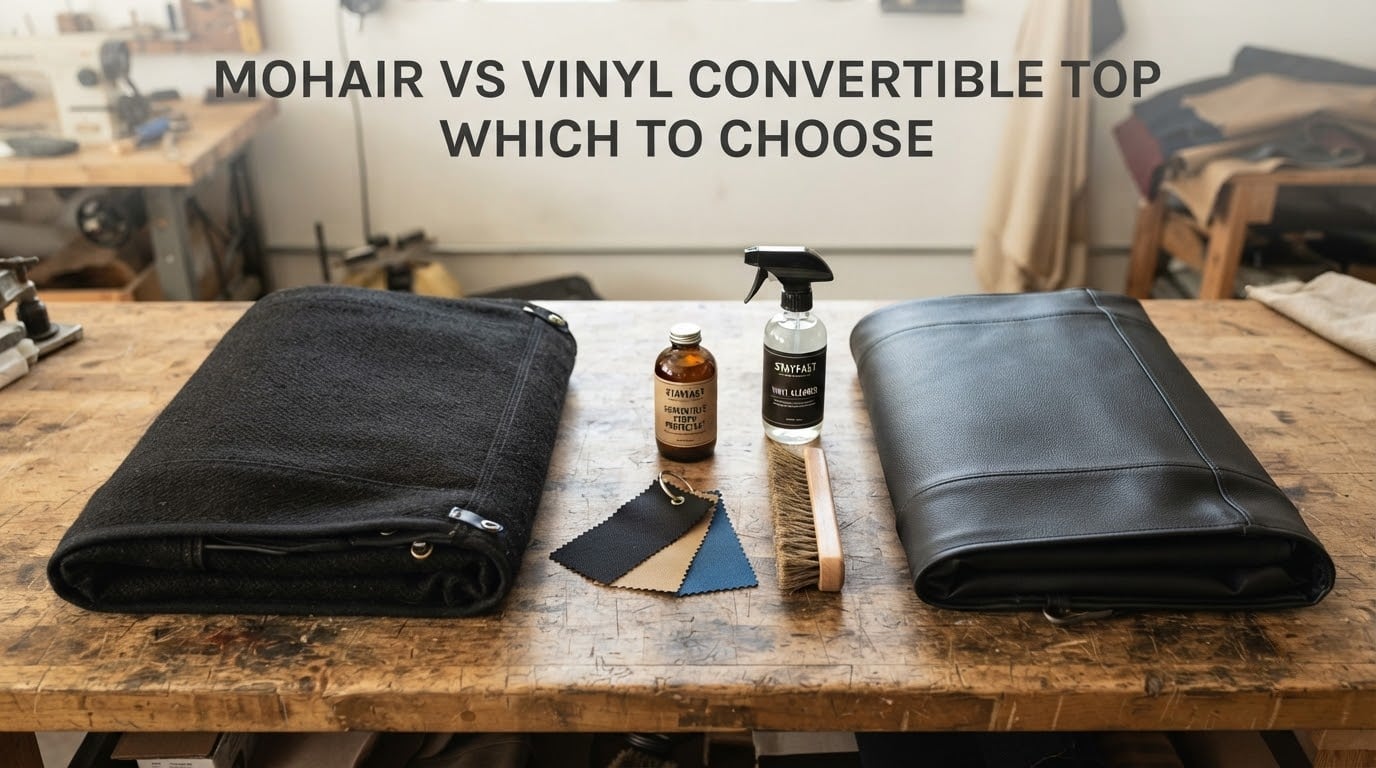
Picking between a mohair and a vinyl convertible top is one of those decisions that follows you around for the next decade every time you close the roof. I have replaced both materials on customer cars over the years at our shop, and the choice always comes down to the same handful of trade-offs.
Mohair (also called canvas or cloth) and vinyl are the two dominant soft top materials on the road today. They look different, sound different, age differently, and ask different things from you as an owner. This guide walks through what each one actually is, how they compare on every dimension that matters, and how to match the right material to your car, your climate, and the way you drive.
Table of Contents
- Quick Answer: Which Should You Choose?
- What Is a Vinyl Convertible Top?
- What Is a Mohair (Canvas) Convertible Top?
- Mohair vs Vinyl Convertible Top: Side-by-Side Comparison
- Durability and Lifespan: Which Material Lasts Longer?
- Maintenance and Cleaning: How Much Work Are We Talking?
- Noise, Comfort, and Aesthetics
- Climate and Weather Performance
- Specific Materials Worth Knowing
- How to Decide: A Quick Decision Framework
- Vehicle-Specific Recommendations
- Window Options: Plastic vs Glass With Each Material
- When to Repair vs Replace
- Frequently Asked Questions
- What is the best material for a convertible top?
- Which is better for a convertible top, cloth or vinyl?
- How long do vinyl convertible tops last?
- How long do mohair convertible tops last?
- What is the best fabric convertible top cleaner and protectant?
- Should you run a soft top convertible through a carwash?
- Final Verdict: Mohair vs Vinyl Convertible Top
Quick Answer: Which Should You Choose?
If you want the short version: mohair tops win on looks, sound, and authenticity, while vinyl tops win on price, cleaning ease, and pure waterproofing. Most daily drivers do well with vinyl, while classic and show cars usually deserve mohair.
Here is the decision in one paragraph for anyone skimming: choose vinyl if you park outside year round, hate cleaning, want the lowest upfront replacement cost, and live somewhere with harsh sun or heavy rain. Choose mohair if you want the soft matte appearance of a European or vintage convertible, value a quieter cabin, do not mind spending an hour or two a year on fabric care, and either garage the car or live in a moderate climate.
The rest of this guide explains those choices in detail so you can match the material to your specific situation.
What Is a Vinyl Convertible Top?
A vinyl convertible top is a multi-layer synthetic roof made from PVC-based material stretched over a cotton or polyester backing. The outer surface is non-porous, which is why water beads up and rolls off instead of soaking in.
The most common vinyl used in modern replacement tops is Haartz pinpoint vinyl. Pinpoint refers to the small dimpled pattern pressed into the surface, which mimics the older leather-grain look from the 1960s and 1970s. You will also see crush grain and colonial grain textures, both of which are vinyl finishes designed to match a specific era of car.
Vinyl became the dominant factory material through the 1980s and 1990s, especially on American convertibles like the Mustang, Camaro, and Corvette. It was cheap to produce, easy to install, and stayed watertight for years with minimal care. That is still true today.
The main appeal of vinyl comes down to three things: it is the easiest material to clean, it is genuinely waterproof rather than just water resistant, and it costs less to manufacture than a quality woven fabric.
What Is a Mohair (Canvas) Convertible Top?
A mohair convertible top is a woven fabric roof, traditionally made from a blend of mohair and cotton, though modern versions often use acrylic or polyester weaves for better UV stability and longevity.
The word mohair is sometimes used loosely to mean any canvas convertible top, but the real thing is a tightly woven fabric with a soft matte finish. It is the material most European convertibles shipped with from the factory, and it is what you want on a vintage MGB, Jaguar XK, or Mercedes SL if you care about originality.
Modern mohair-style tops usually come as multi-layer composites. A typical construction has an acrylic twill weave on the outside, a butyl rubber core in the middle for waterproofing, and a cotton or polyester lining on the inside for sound and appearance. Brands like Stayfast, British Bison, Square Weave, and HV Denim are all types of canvas convertible top fabric, each with a slightly different weave and look.
Mohair tops look richer, sound quieter, and breathe more than vinyl. The flip side is that they need more care, cost more to buy, and can develop mold if left damp for long periods.
Mohair vs Vinyl Convertible Top: Side-by-Side Comparison
This table is the heart of the decision. I have stacked the two materials against each other on every dimension that tends to come up in our shop.
| Feature | Mohair (Canvas) | Vinyl |
|---|---|---|
| Look and finish | Soft matte, woven texture, premium appearance | Glossy or dimpled, synthetic appearance |
| Water resistance | Water resistant (needs occasional re-treatment) | Fully waterproof out of the box |
| Typical lifespan | 10 to 20 years with care | 7 to 12 years |
| UV and fade resistance | Good with modern acrylic weaves | Good, but can crack with age |
| Cleaning effort | Fabric-safe cleaners, gentle brushing, more steps | Wipe with mild soap and water, very easy |
| Cabin noise | Quieter, fabric dampens road and wind noise | Louder, especially at highway speed |
| Temperature regulation | Breathes better, less condensation inside | Traps heat, more condensation in cold weather |
| Weight and flexibility | Lighter and more flexible, easier to fold | Heavier and stiffer, more stress on the frame |
| Initial replacement cost | Higher, especially for Stayfast or British Bison | Lower, widely available in standard patterns |
| Long-term value | Better resale on classics and European cars | Better resale on American daily drivers |
| Mold and mildew risk | Higher if stored damp | Very low, surface dries quickly |
| Repair options | Patch kits exist but visible on close inspection | Vinyl repair kits work well and blend cleanly |
| Best for | Classics, show cars, European cars, garage-kept | Daily drivers, outdoor parking, budget builds |
Durability and Lifespan: Which Material Lasts Longer?
A well-cared-for mohair top will outlast a vinyl top in most cases. We routinely see 15 to 20 year old Stayfast tops on customer cars that still look respectable, while vinyl in the same climate usually starts showing cracking or seam failure around year 8 to 12.
The durability gap comes down to what each material fails from. Vinyl fails from UV and temperature cycling. The plasticizers in the PVC slowly migrate out, the material gets stiff, and hairline cracks appear along the folds and seams. Once that process starts it accelerates.
Mohair fails from abrasion, mildew, and neglect rather than age. The fabric itself is dimensionally stable, so it does not crack. If you keep it clean, store the car in a garage, and re-treat the water repellency every couple of years, a good mohair top will easily outlast a vinyl replacement.
If you want a real number to plan around: budget 10 years for vinyl and 15 years for mohair, then double those expectations for a garage-kept car in a mild climate.
Maintenance and Cleaning: How Much Work Are We Talking?
Vinyl is the easier material by a wide margin. Bird droppings, tree sap, road grime, and dust all come off with a bucket of mild soap, water, and a soft brush. A full wash takes 15 minutes. Vinyl protectant applied once or twice a year keeps the surface supple and buys you a few extra years before the plasticizer loss starts to show.
Mohair wants more attention. The recommended routine is to vacuum loose dirt, brush gently with a soft-bristle brush in one direction, then clean with a fabric-specific convertible top cleaner. Avoid household detergents, bleach, or anything silicone-based, as these can strip the water-repellent coating or leave residue that attracts more dirt.
Re-waterproofing is the part most owners forget. A quality mohair top should be treated with a fabric protectant every 12 to 24 months depending on climate. You can do a quick water bead test by sprinkling water on the surface: if it soaks in instead of beading up, it is time to re-treat.
Avoid jet washing either material, but especially mohair. The high-pressure water can force its way past the seams and into the headliner area, and one forum regular on pistonheads learned the hard way that cleaning in direct sun leaves marks because the product dries before you can rinse it.
Noise, Comfort, and Aesthetics
The difference in cabin noise between mohair and vinyl is real and noticeable. A fabric top damps road and wind noise in a way vinyl simply cannot. If you have ever driven the same car with both materials you know the gap is not subtle, especially at highway speed where wind noise gets tiring over a long drive.
Mohair also regulates temperature better. The fabric breathes, which means less condensation building up on the inside of the windows in cold weather and less heat soak in summer. Vinyl traps moisture and heat against the headliner, which is why you sometimes see fogging on the inside of the rear window on a chilly morning.
Aesthetically there is no contest if the car is a classic. The matte woven look of mohair reads as premium and original. Vinyl, even high-quality Haartz pinpoint, looks like plastic on close inspection. On a Mustang or Camaro daily driver that gap matters less. On a 1967 Jaguar E-Type or an original MGB, it matters a lot.
Climate and Weather Performance
Climate is where the mohair vs vinyl decision gets specific.
Hot and sunny climates are hard on both materials, but vinyl suffers more. UV exposure drives plasticizer migration, which is what leads to cracking. A dark vinyl top in Phoenix or Miami will show age faster than the same top in Seattle. Mohair with a modern acrylic weave handles UV well but still benefits from a UV protectant and shade when possible.
Cold and snowy climates favor vinyl. The material shrugs off ice and does not absorb water, so freeze-thaw cycles are less of a concern. Mohair can handle cold fine, but if you store the car with a wet top it can develop mildew or even freeze solid in extreme conditions.
Wet and rainy climates favor vinyl on pure waterproofing. A new vinyl top is genuinely waterproof, while mohair is water resistant at best. After re-treatment it comes close, but if you live somewhere that gets sideways rain every week, vinyl is the lower-stress choice.
Mild and moderate climates are where mohair shines. No extreme UV, no deep freezes, lower mildew risk, and the premium look pays off every time you open the garage door.
Specific Materials Worth Knowing
Not all canvas is the same, and not all vinyl is the same. Here are the four names that come up most often when ordering a replacement top.
Haartz Pinpoint Vinyl is the industry standard vinyl material. The pinpoint texture mimics vintage leather grain, which is why it is the default choice for restoring American classics from the 1960s and 1970s. It is also the cheapest path to a watertight, easy-to-clean top.
Stayfast Canvas is the most popular modern mohair alternative. It is a three-layer composite with an acrylic twill weave, butyl rubber waterproof core, and cotton backing. It handles UV better than older pure-mohair weaves, costs less than British Bison, and is the default recommendation for European cars like MGs, Triumphs, and Miatas.
British Bison Canvas is a heavier, more textured weave with a distinctive grain. It is the right choice for high-end restorations and concours judges who want the most authentic period look. It costs more and weighs more than Stayfast but is hard to beat for visual accuracy on a vintage British roadster.
HV Denim is a square-weave canvas with a denim-like appearance. It was a common factory material on some British and European convertibles in the 1960s and is now mostly used on period-correct restorations of those specific vehicles.
How to Decide: A Quick Decision Framework
If you are still on the fence, run through these five questions in order.
1. Is the car a classic, vintage, or European roadster? Yes means mohair (Stayfast or British Bison, depending on era). No means it depends on the next questions.
2. Where does the car live when it is not being driven? Garage kept means mohair is a safe bet. Outdoor parking most of the time means vinyl will save you headaches.
3. How much maintenance do you want to do? Almost none means vinyl. An hour a year on cleaning and re-proofing means mohair is fine.
4. What is your climate like? Hot sun, heavy rain, or both means vinyl. Mild and moderate means mohair is realistic.
5. What does your budget look like? If upfront cost is the deciding factor, vinyl wins. If you are planning to keep the car long term and resale value matters, mohair pays you back.
Vehicle-Specific Recommendations
Different cars have a default material that makes sense for their use case and history.
American muscle and daily drivers (Mustang, Camaro, Corvette, Miata as a daily): vinyl is the practical pick. Pinpoint vinyl matches the factory look, costs less, and is easy to live with on a car parked outside at the office all day.
European luxury and grand tourers (Mercedes SL, Jaguar XK, BMW 6 Series): mohair, usually Stayfast. These cars shipped with fabric tops from the factory, and a vinyl replacement will look out of place even if it is technically fine.
British classics (MGB, Midget, Triumph TR, Austin-Healey): mohair, with British Bison for concours restorations and Stayfast for drivers. HV Denim for original-spec restorations of the right era.
Vintage sports cars (1960s Alfa, early Porsche, Jaguar E-Type): mohair is the only choice that looks right. Period-correct weave and color matter for value here.
Family convertibles and pet-friendly daily drivers: vinyl wins on cleanability. Kids and dogs will stain fabric, and the effort to keep mohair clean under those conditions is high.
Window Options: Plastic vs Glass With Each Material
Window choice pairs with material choice. Most replacement tops come with a plastic rear window as standard, usually Renolit Flexglas or a similar flexible PVC.
Plastic windows are lighter, fold with the top, and are cheaper to replace if they scratch. The downside is they scratch easily, haze over time, and do not defrost as efficiently as glass.
Glass rear windows are an upgrade worth considering on mohair tops especially. They look cleaner, scratch less, and often include a defrost grid that ties into the existing wiring. The trade-off is that glass windows are heavier, cost more, and require careful handling during installation to avoid cracking the seal.
For a daily driver vinyl top, plastic windows are perfectly adequate. For a quality mohair replacement on a car you plan to keep, glass is worth the upgrade.
When to Repair vs Replace
Not every problem needs a full replacement. Small tears, seam separations, and minor leaks can often be patched, especially on a newer top.
Repair instead of replace when: the top is under 5 years old, the damage is limited to a small tear or seam, the headliner and padding are still in good shape, and water entry is isolated rather than widespread.
Replace instead of repair when: the top is over 10 years old, you see widespread cracking or sagging on vinyl, the fabric has thinned or developed mildew across large areas, the rear window seal is failing along its full length, or the headliner is sagging and stained.
A full replacement is also the right call if you are switching materials. Trying to bond a vinyl patch to a mohair top, or vice versa, never looks right.
Frequently Asked Questions
What is the best material for a convertible top?
Mohair (canvas) and vinyl are both excellent choices but serve different needs. Mohair offers a premium matte look, quieter cabin, and longer lifespan, while vinyl is fully waterproof, easier to clean, and costs less. The best material is the one that matches your climate, parking situation, and how much maintenance you want to do.
Which is better for a convertible top, cloth or vinyl?
Cloth (mohair or canvas) is better for classic cars, show cars, European models, and garage-kept vehicles where appearance and quietness matter most. Vinyl is better for daily drivers, outdoor parking, hot or rainy climates, and budget-conscious owners who want minimal cleaning effort.
How long do vinyl convertible tops last?
Vinyl convertible tops typically last 7 to 12 years in normal use, longer in mild climates and shorter in hot sun or extreme cold. The material eventually cracks along the folds as plasticizers migrate out of the PVC. Proper cleaning and vinyl protectant applied once or twice a year can extend that range.
How long do mohair convertible tops last?
Mohair convertible tops last 10 to 20 years on average, and well over 20 years on garage-kept cars in mild climates. Modern acrylic-weave composites like Stayfast resist UV and weather better than older pure-mohair weaves. Lifespan depends mostly on cleaning routine and re-waterproofing every 12 to 24 months.
What is the best fabric convertible top cleaner and protectant?
Use a cleaner specifically labeled for fabric convertible tops, paired with a separate fabric protectant that re-applies water repellency. Avoid household detergents, bleach, and silicone-based products. A quick water bead test tells you when re-treatment is needed: if water soaks in instead of beading, it is time to protect again.
Should you run a soft top convertible through a carwash?
Avoid automatic car washes with a fabric or vinyl convertible top. Brush-type car washes scratch the surface and can damage seams, and high-pressure jet washes can force water past the seals into the headliner. Hand washing with a soft brush and mild cleaner is the safe routine for both materials.
Final Verdict: Mohair vs Vinyl Convertible Top
There is no universal winner in the mohair vs vinyl convertible top decision, only the right answer for your specific car and situation.
If I had to pick one default recommendation for most owners reading this in 2026: vinyl is the safer choice for the majority of daily-driver convertibles on the road, while mohair is the right answer for anyone restoring a classic or owning a European soft top where authenticity and finish matter.
Start with the vehicle, then layer in climate, parking, and budget. Match the material to those four factors and you will end up with a top that looks right, lasts as long as it should, and fits the way you actually use the car.
Have a question about a specific car or material we did not cover here? Our team works on these every week and we are happy to help you pick the right top for your situation.