
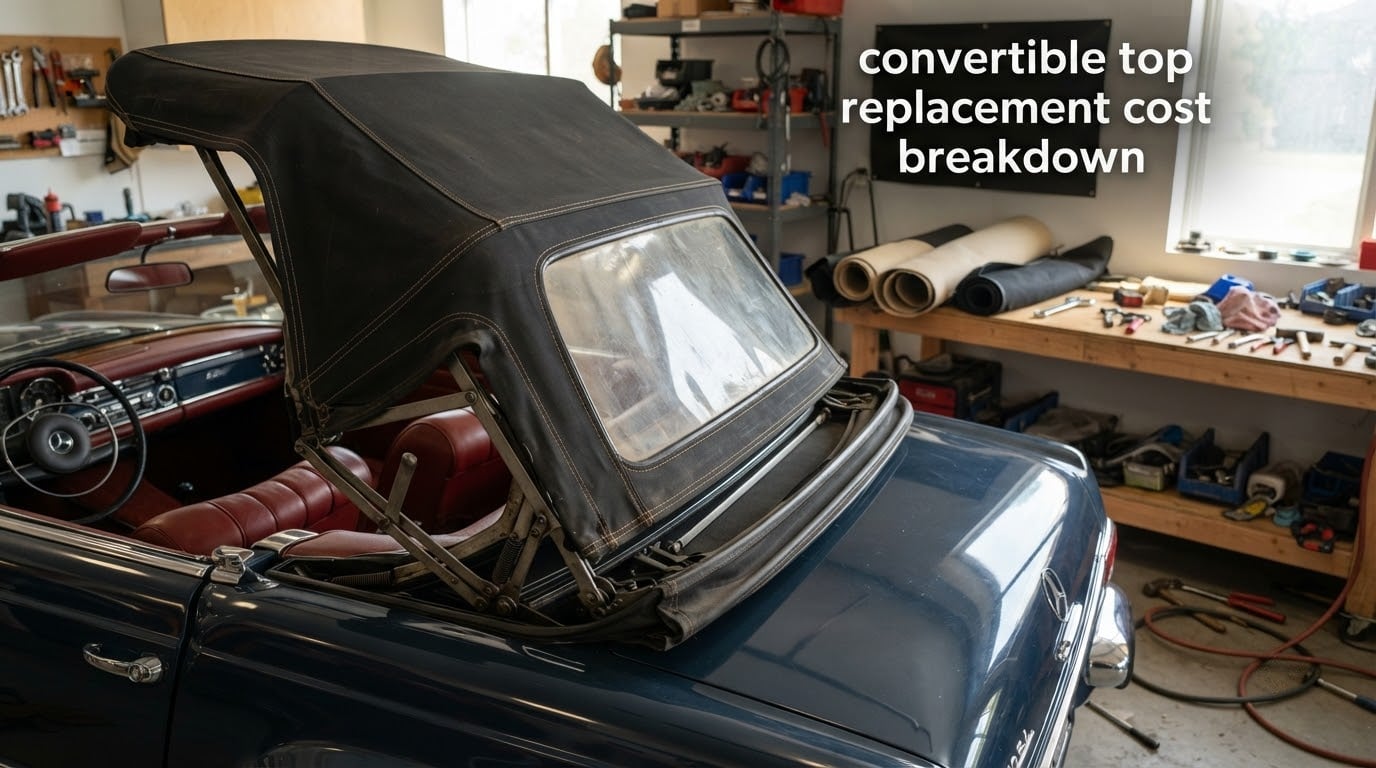
If you have owned a convertible long enough, the day the top starts leaking, fading, or splitting at a seam is going to arrive. When it does, the first question on every owner’s mind is the same: what does convertible top replacement cost, really, once everything is added up? I have been answering that question from behind the counter of an upholstery shop for years, and the short answer is that most owners end up somewhere in the middle of a very wide range, depending on what they drive, what they choose, and who installs it.
In this guide I will walk you through every line item that shows up on a real quote, the parts that quietly inflate the bill, the difference between vinyl and sailcloth, what a heated glass rear window adds, and how to tell whether a shop is being fair with you. By the end you will know exactly what to budget, what to ask for in writing, and when a repair makes more sense than a full replacement.
Table of Contents
- Quick Answer: Convertible Top Replacement Cost at a Glance
- Convertible Top Replacement Cost Overview: Parts vs Labor
- Parts Cost Breakdown: What You Are Actually Paying For
- Labor Cost Breakdown: Hours, Rates, and What Drives Both
- Material Options: Vinyl, Canvas, Cloth, and Sailcloth Compared
- Window Type Differences and Their Cost Impact
- Convertible Top Replacement Cost by Vehicle Class
- DIY vs Professional Installation Cost
- Hidden Costs Most Quotes Forget to Mention
- Top Brands and Suppliers Compared
- Repair vs Replacement: When Each Makes Sense
- How to Extend the Life of Your New Convertible Top
- Insurance Coverage and Warranty Considerations
- How to Get a Fair Quote From an Upholstery Shop
- Frequently Asked Questions
- Conclusion
Quick Answer: Convertible Top Replacement Cost at a Glance
For a typical domestic convertible in 2026, the total installed cost generally falls into these bands:
- Economy compact (Miata, older Mustang, basic VW): lowest total installed cost of any class
- Mid-range (Camaro, Mustang GT, Accord, older BMW): middle of the market for parts and labor
- Luxury and modern European (Mercedes, BMW, Audi, Lexus): highest parts cost, often the highest labor hours
- Vintage and classic: widest range of all, driven by availability of materials and patterns
The single biggest factor in the final number is not the fabric. It is the combination of material choice, window type, vehicle complexity, and whether you reuse existing cables and pads or replace them all.
Convertible Top Replacement Cost Overview: Parts vs Labor
Every legitimate quote breaks into two buckets: parts and labor. For most vehicles, parts account for roughly half to two-thirds of the total bill, and labor covers the rest. That ratio inverts on cheaper vehicles with simpler frames, where labor hours can actually exceed the parts cost.
Here is how a typical shop quote breaks down before tax:
- Top kit (fabric, window, padding, sometimes cables): the largest single line item
- Labor hours: the second largest line item, billed at the shop’s hourly rate
- Consumables: contact cement, thread, fasteners, and tack strip
- Optional upgrades: heated glass, defroster wiring, custom well liner
The total installed cost for a mainstream convertible usually lands somewhere that would surprise most first-time shoppers. Forum owners on r/Miata and thirdgen.org regularly report totals for popular models in the same general neighborhood, which is a useful sanity check when a quote seems way off.
Parts Cost Breakdown: What You Are Actually Paying For
The top kit is more than just fabric. When you price a replacement top, you are paying for a stack of components, and skipping any of them usually shows up later as a leak or a saggy headliner.
Top Fabric (Vinyl, Cloth, Canvas, Sailcloth)
The fabric itself is the headline number on every quote. Vinyl is consistently the lowest priced material because it is mass-produced and easy to work with. Cloth (often called canvas in the aftermarket) sits in the middle. Sailcloth, which is a textured, two-layer woven material that mimics the look and feel of older canvas, is the premium choice on most modern aftermarket tops.
Pattern matters more than material when it comes to fit. A poorly cut top in premium cloth will leak faster than a properly cut top in basic vinyl.
Rear Window
The rear window is sold either as a separate piece or bonded into the top. Plastic rear windows are the lowest cost option and the easiest to replace on their own. Heated glass rear windows cost more than the entire rest of a basic top kit on some vehicles, but they are what every modern luxury convertible ships with from the factory.
Pads, Liners, and Headliner
The padded layer sits between the fabric and the frame. It insulates against noise, hides the bows and cables, and gives the top its finished interior look. Replacement pads are often sold as part of a kit, but some shops quote them separately.
Cables, Tension Cords, and Bow Strings
These are the moving parts that keep the top taut. Reusable cables in good condition save real money; worn cables are the most common reason a new top fails early.
Tack Strips, Weatherstrip, and Trim
The little pieces nobody talks about until they are missing. Old tack strips crack when you pull them, and reusing them is false economy. A complete kit includes fresh strips, but some quotes list them as a separate line.
Well Liner
The well liner is the fabric that lines the storage tub where the folded top rests. On older cars it is often the first thing to fail. Aftermarket well liners are a small add-on that prevents rattles and water intrusion.
Labor Cost Breakdown: Hours, Rates, and What Drives Both
Labor is the other half of every quote, and it is where I see the widest swings from shop to shop.
Typical Installation Time
A straightforward convertible top replacement takes a skilled tech roughly 4 to 8 hours. Older vehicles with rusty fasteners or seized cables can stretch a job to 10 or 12 hours. Modern luxury convertibles with power-folding mechanisms and one-touch latches often fall in the middle of that range, because the hardware does the heavy lifting but the wiring takes time.
Shop Hourly Rates
Upholstery shops and convertible specialists charge less per hour than franchised dealers. The hourly rate varies by region and by the type of shop you walk into. Specialty convertible shops tend to be faster (because they do this all day), which often makes their total labor bill lower than a general upholstery shop even when the hourly rate looks higher on paper.
Regional Labor Differences
Forum owners in higher-cost-of-living regions report noticeably higher labor totals than owners in smaller markets, even for the same vehicle. The same Miata job that totals in the middle of the range in the Midwest can run twenty to thirty percent higher in coastal California or the Northeast.
Material Options: Vinyl, Canvas, Cloth, and Sailcloth Compared
Material choice affects both price and how long the top will last. Here is how the four common choices compare.
Vinyl
Vinyl is the lowest priced material and the easiest to repair. It does not breathe, which means you can see condensation under it on cold mornings, and it tends to stiffen with age. For a daily driver that lives outside, a quality vinyl top typically lasts 6 to 8 years before the seams or the rear window give out.
Cloth / Canvas
Cloth tops breathe, look more like the original factory material on older cars, and last noticeably longer than vinyl in most climates. They cost more upfront, but owners on thirdgen.org and classicoldsmobile.com consistently report getting 10+ years out of a good cloth installation.
Sailcloth
Sailcloth is the premium aftermarket choice. It has the woven texture and longevity of cloth with better water resistance. It is the most expensive material on most quotes and is what the top Robbins and similar premium kits ship with.
Window Type Differences and Their Cost Impact
The rear window is one of the most expensive parts of a convertible top kit, and the price difference between the two main options is substantial.
Plastic Rear Window
Plastic (PVC) windows are flexible, replaceable on their own, and the lowest cost option. They scratch more easily than glass and can yellow over time, but a replacement window on most vehicles is a small fraction of the cost of heated glass.
Heated Glass Rear Window
Heated glass is what factory luxury and modern convertibles ship with. It costs more, takes more labor to install because of the wiring, and is bonded into the top rather than stitched in. The defroster alone can add several hundred dollars to a quote, but on a vehicle you drive year-round, it is hard to give back once you have lived with it.
Convertible Top Replacement Cost by Vehicle Class
The same job costs very different amounts depending on what you drive. Here is how the four common classes compare.
Economy Compact Convertibles
Mazda Miata, early Mustang, Chrysler Sebring, VW Cabrio, and similar economy convertibles sit at the bottom of the price range. Parts are mass-produced, the frames are simple, and many shops have done hundreds of them. This is also the class where DIY savings are largest, because the kits are widely available and the mechanical complexity is low.
Mid-Range Convertibles
Camaro, Mustang GT, Accord, Solstice, and similar mid-range cars sit in the middle of the market. Aftermarket support is good, but the frames are more complex, often with power-folding hardware. Labor hours trend higher than on economy compacts.
Luxury and European Convertibles
Mercedes, BMW, Audi, Lexus, Porsche, and similar luxury convertibles are the highest cost class for two reasons: the parts themselves cost more, and the labor hours are higher because of integrated electronics, sensors, and hydraulic components. Dealer quotes are routinely far higher than aftermarket shops, sometimes by a factor of two or three.
Vintage and Classic Convertibles
Vintage cars are the wild card. Some have abundant aftermarket support, which keeps parts cost reasonable. Others require OEM-only materials, which can be very hard to source. Labor on a vintage job is often higher because of seized fasteners, brittle original parts, and the care required to preserve a collector vehicle.
DIY vs Professional Installation Cost
DIY is the most popular cost-saving move for economy and mid-range convertibles, and the worst idea on most luxury and vintage jobs.
What DIY Actually Saves
Going DIY means buying the kit and installing it yourself. You save the entire labor line on your quote, which is roughly half to two-thirds of the total. You also save on shop mark-up on parts if you source the kit yourself. On a typical economy convertible, DIY can cut the total bill to less than half of a shop install.
What DIY Costs Beyond the Kit
You will still need contact cement, a staple gun, hog rings and pliers, a heat gun, and a helper for the actual installation. Expect to add the cost of these consumables to your parts budget, plus a full weekend of your time at minimum.
Skill Level Required
This is the part where DIY goes wrong for most owners. Top installation is not mechanically difficult, but it is physically demanding, awkward in tight spaces, and unforgiving of mistakes. A wrinkled top is a leaking top. A pinched cable is a broken top. I have personally re-installed more than one DIY job that came in worse than the original leak.
When to Hire a Professional
If you drive a modern luxury convertible with sensors, hydraulic lift cylinders, and computer-controlled latching, hire a shop. If you are restoring a classic, hire a shop. If your daily driver has any rust around the frame, hire a shop. DIY works best on simple economy convertibles with straight frames and basic manual tops.
Hidden Costs Most Quotes Forget to Mention
This is where most owners get surprised. The headline number from a shop is rarely the final number, and the gap is almost always one of these line items.
Cable Replacement
Cables wear with the top. A shop that quotes the job without inspecting the cables is either planning to reuse them or planning to surprise you. Ask explicitly whether the quote includes new cables, and whether reused cables are warranted.
Pad Replacement
Old pads absorb water and develop mildew. They also telegraph every wrinkle in the old fabric to the new top. Most shops will not guarantee a wrinkle-free installation over original pads.
Defroster Wiring
Upgrading from a plastic window to a heated glass window means new wiring, a switch, and sometimes a relay and fuse. None of this shows up on a basic top quote.
Tack Strips and Weatherstrip
These small parts often break on removal. A fair quote includes them; a budget quote does not.
Shipping on the Kit
Most online suppliers ship the top kit free, but some do not, and the weight of a kit plus box can be substantial.
Sales Tax
Tax is rarely included in a verbal quote. Always ask whether the number you are given is before or after tax.
Top Brands and Suppliers Compared
You will see the same handful of names come up over and over when researching tops. Here is how they compare on what matters.
Robbins Auto Top
Robbins is the most cited aftermarket brand in owner forums. They make patterns for a huge range of domestic and import vehicles, offer both vinyl and premium materials, and back their tops with a multi-year warranty. Most specialty shops stock Robbins kits.
Haartz
Haartz is the OEM supplier of convertible top material to most major automakers. When you buy a Robbins or other aftermarket top made with Haartz fabric, you are getting the same material the factory used.
TopsOnline and AutoTopsDirect
These are the two largest direct-to-consumer online suppliers. Both ship kits with everything needed for a DIY install, both offer phone support, and both are regular recommendations on owner forums.
OEM Replacement
OEM replacement tops exist for some vehicles and are usually the most expensive option. They are worth considering on a vintage car where aftermarket fit is questionable, and worth skipping on a daily driver where the aftermarket has caught up.
Repair vs Replacement: When Each Makes Sense
Not every convertible top problem needs a full replacement. Here is how to think about which fix is right.
Small Tears and Punctures
A small tear under a few inches can usually be patched with a vinyl or fabric repair kit. Patches are a stopgap, not a permanent fix, but they buy time.
Seam Failures
Split seams on a relatively new top are often covered under warranty. If your top is out of warranty, a re-stitch is much cheaper than a full replacement, but only if the fabric is otherwise sound.
Window-Only Replacement
If the fabric is in good shape but the rear window has yellowed or cracked, a window-only replacement is a real option on many vehicles. It is one of the smartest repairs an owner can make, because a new window on an old top extends the life of the top significantly.
Full Replacement Triggers
Full replacement is the right call when the fabric is faded through, the padding is mildewed, multiple seams have failed, or you are seeing water intrusion in more than one spot. At that point patches and re-stitches are throwing good money after bad.
How to Extend the Life of Your New Convertible Top
The cheapest top replacement is the one you can delay. Here is how to get the most years out of a fresh install.
Cleaning Routine
Wash the top every month with a cleaner made for the specific material. Vinyl gets vinyl cleaner; fabric gets fabric cleaner. Household detergents strip the protective coatings and shorten the life of the top.
Waterproofing
A quality fabric protectant reapplied every year or two keeps water beading on the surface and out of the padding. Vinyl does not need waterproofing, but it does benefit from a UV protectant.
Storage Habits
Garage the car when you can. UV is the single biggest killer of convertible top material, and parking in direct sun cuts the lifespan dramatically.
Avoiding Mechanical Damage
Never operate the top with ice on it. Never force a slow-moving top. Listen for changes in motor sound or cable tension; addressing a small issue now prevents a big replacement later.
Insurance Coverage and Warranty Considerations
Whether your insurance helps pay for a convertible top replacement depends on what caused the damage and what coverage you carry.
Comprehensive Coverage
Comprehensive coverage typically pays for convertible top replacement when the damage comes from theft, vandalism, fire, or weather (hail, falling objects, animal strikes). It does not cover normal wear and tear, fading, or seam failure.
Collision Coverage
Collision coverage applies when the top is damaged in a crash. If you rear-end someone with the top down, collision can pay for both the body damage and the top replacement.
Aftermarket Warranty Length and Coverage
Most premium aftermarket tops carry a 3 to 5 year warranty on the fabric and seams, with some offering lifetime on certain components. Read what is and is not covered. Labor to replace a warrantied top is rarely included.
What to Look For in a Warranty
The best warranties are written, named-brand, and cover seam failure, fabric delamination, and window separation. The worst warranties are verbal, from the installer, and tied to a short window after install.
How to Get a Fair Quote From an Upholstery Shop
A good quote is detailed, written, and easy to compare against other quotes. A bad quote is a single number over the phone. Here is how to make sure you are comparing apples to apples.
Get Three Quotes
Three quotes is the sweet spot. One quote is a guess. Two quotes is a coin flip. Three quotes gives you a real median and tells you whether any one shop is way out of line.
Ask for the Quote in Writing
A verbal quote is worth nothing if it changes by the time you pick up the car. Get the parts list, labor hours, hourly rate, and total in writing, with tax clearly shown.
Questions to Ask Every Shop
- Are the cables included, or am I paying extra if mine are worn?
- Are the pads included, or am I paying extra if mine are mildewed?
- What warranty do you offer on the installation?
- What is the hourly rate, and how many hours do you expect?
- Is the rear window included in the kit price?
- What brand and material is the kit?
Red Flags
A quote that is dramatically lower than the other two is not a deal. It is missing line items. A quote that is dramatically higher may include unnecessary upgrades or be padding labor hours. Both ends of the range deserve a follow-up conversation.
Frequently Asked Questions
What is the average price to replace a convertible top?
Most owners pay somewhere in the middle of a wide range, depending on vehicle class, material choice, and window type. Economy compact convertibles come in at the low end, mid-range cars sit in the middle, and luxury or European convertibles run highest because of parts cost and labor hours.
What is the average lifespan of a convertible top?
A quality vinyl top typically lasts 6 to 8 years on a daily driver. Cloth and sailcloth tops last longer, often 10 years or more with regular cleaning and protection. Direct sun, lack of cleaning, and ignored leaks all shorten lifespan.
How difficult is it to replace a convertible top?
Top installation is physically demanding and awkward more than mechanically complex. A skilled first-timer with a helper can complete a basic economy convertible in a weekend. Modern luxury convertibles with sensors and hydraulic hardware are not realistic DIY projects.
How long does it take to replace a convertible top?
A straightforward professional installation takes 4 to 8 hours. Older vehicles with seized fasteners, rust, or worn cables can stretch to 10 to 12 hours. Modern luxury convertibles often fall in the middle of that range.
Who installs replacement convertible tops?
Specialty convertible top shops are the best option for most vehicles. General upholstery shops handle simpler economy convertibles well. Dealers handle warranty work but charge substantially more than aftermarket shops for the same parts.
Where can I find replacement convertible tops?
Aftermarket suppliers like Robbins Auto Top, TopsOnline, and AutoTopsDirect ship direct to consumers and to shops. Local upholstery shops often have preferred suppliers they have used for years and can order from on your behalf.
Conclusion
A convertible top replacement cost comes down to five things: vehicle class, material choice, window type, parts included, and the labor rate of the shop doing the work. Get three written quotes, ask explicitly about cables and pads, choose the material that fits your climate and budget, and you will end up with a fair number and a top that lasts a decade or more.
If you are staring at a wet headliner right now, start by deciding whether a repair buys you another year or whether a full replacement is the smarter spend. Either way, knowing exactly what is on the quote before you sign is what keeps the bill in the place you actually planned for.