
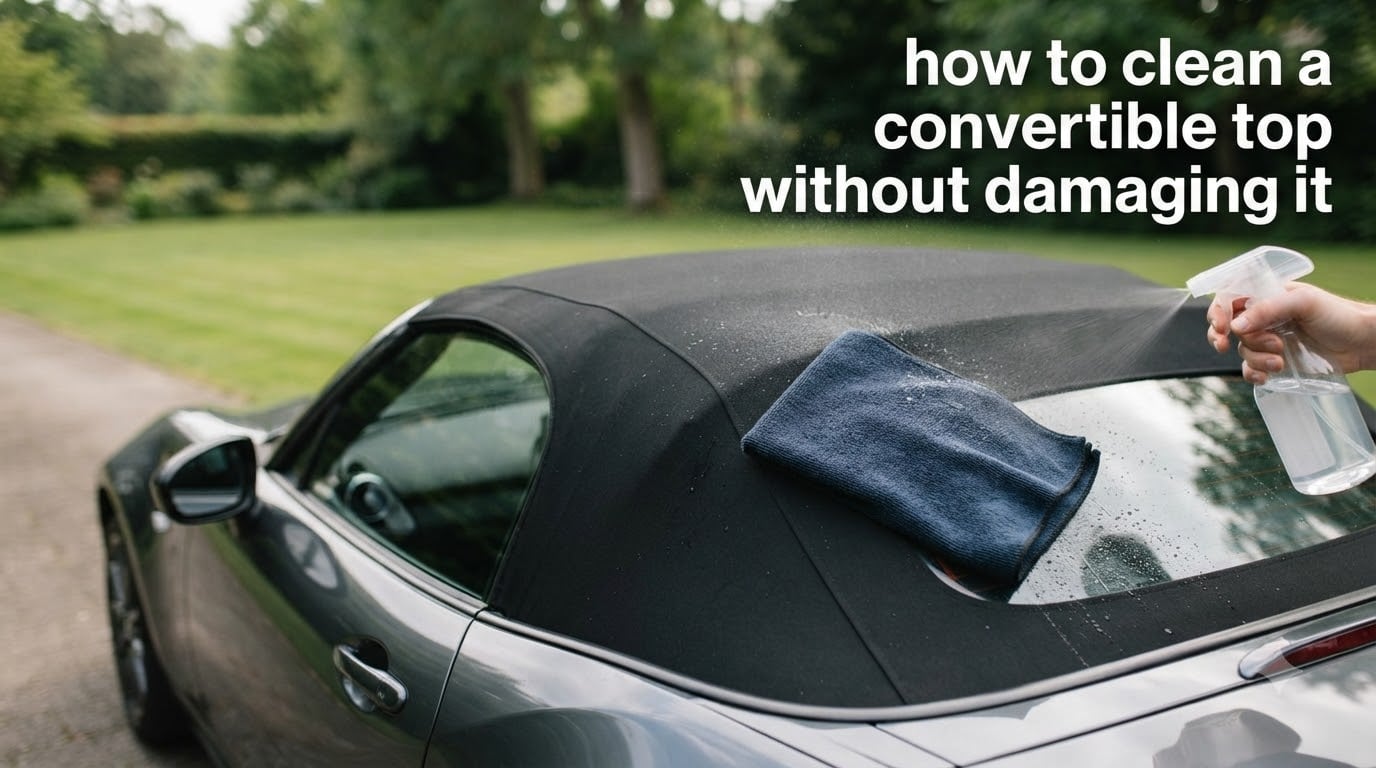
Cleaning your convertible top the wrong way can cost you over $1,000 in replacement costs. I have seen too many car owners accidentally destroy their soft tops by using harsh chemicals, aggressive scrubbing, or tools that seem harmless but actually cause irreversible damage. Learning how to clean a convertible top without damaging it means understanding the difference between fabric and vinyl materials, using pH-neutral cleaners, and following a gentle process that lifts dirt rather than grinding it into the fibers.
The consequences of improper cleaning go beyond simple aesthetics. Using the wrong products can cause fabric fraying, color fading, stitching deterioration, and loss of water repellency. A convertible top that once shed rain beautifully can start absorbing water, developing mold, and eventually cracking or tearing under the stress of weakened fibers. The good news is that safe cleaning is straightforward once you understand the fundamentals.
In this guide, I will walk you through everything you need to know about convertible top care. You will learn how to identify your top material, select the right cleaning products, remove stubborn mildew and stains, protect your investment after cleaning, and avoid the common mistakes that ruin soft tops. By the end, you will have the confidence to clean your convertible top properly and extend its lifespan for years to come.
Table of Contents
- Fabric vs Vinyl: How to Identify Your Convertible Top Material
- Tools and Supplies You Will Need
- Step-by-Step Cleaning Process
- How to Remove Mildew and Mold Safely
- How to Remove Common Stains
- Protecting and Conditioning Your Top After Cleaning
- What to NEVER Use on a Convertible Top
- Common Mistakes That Damage Convertible Tops
- Seasonal Care and Maintenance Schedule
- Frequently Asked Questions
- Conclusion
Fabric vs Vinyl: How to Identify Your Convertible Top Material
Before you can clean your convertible top safely, you need to know what material you are working with. Convertible tops come in two primary types: fabric and vinyl. Each material requires different cleaning products and techniques, so misidentifying your top can lead to accidental damage.
The Water Test Method
The easiest way to identify your top material is the water test. Simply splash a small amount of water onto an inconspicuous area of your convertible top and observe how it behaves. If the water soaks into the material and creates a wet spot, you have a fabric top. If the water beads up, smears across the surface without soaking in, or rolls off, you likely have a vinyl top.
Fabric tops, often called canvas tops, have a woven texture that absorbs liquids. They feel more like heavy cloth or canvas material. Vinyl tops have a smooth, plastic-like surface that repels water. When you run your hand across a vinyl top, it feels more like a vinyl seat cover than fabric.
Visual and Tactile Clues
Look closely at the surface of your convertible top. Fabric tops show visible weave patterns and texture. You can often see individual fibers woven together, similar to canvas or denim. Vinyl tops have a uniform, smooth surface without visible weave patterns.
Press your fingernail gently into the material. Fabric tops have more give and feel softer. Vinyl tops feel firmer and more rigid. This difference becomes especially noticeable on older tops where fabric has softened over time while vinyl has maintained its structure.
Why Material Identification Matters
Cleaning products formulated for vinyl can damage fabric tops by leaving residues that attract dirt or break down the fabric’s protective coatings. Conversely, products designed for fabric may not effectively clean vinyl and can leave the surface looking dull or streaky. Some cleaners even cause vinyl to become sticky or tacky, a problem that is difficult to reverse.
Protecting your convertible top after cleaning also differs by material. Fabric tops benefit from fabric guard treatments that restore water repellency. Vinyl tops require conditioning products that maintain flexibility and prevent cracking. Using the wrong protectant can leave your top looking worse than before you cleaned it.
Tools and Supplies You Will Need
Gathering the right tools before you start makes the cleaning process smoother and prevents you from grabbing something harmful mid-project. Here is what you need based on your top material.
Essential Tools for All Top Types
You need a soft-bristled brush with synthetic bristles, never stiff natural bristles or wire brushes. Look for a brush specifically designed for convertible tops or automotive interiors. The bristles should flex easily when you press them against your hand. Forum users on CorvetteForum and AutoGeek consistently recommend soft plastic-bristled brushes that remove dirt without scratching.
Microfiber towels in multiple quantities are essential. You need separate towels for cleaning, rinsing, and drying. Microfiber lifts dirt away from surfaces rather than pushing it around like cotton towels. Avoid paper towels entirely, especially on plastic windows, as they cause scratching and fogging.
A garden hose with adjustable nozzle gives you control over water pressure. You want a gentle flow for rinsing, not a high-pressure blast. Some detailers use foam guns to apply cleaner, which helps the product cling to vertical surfaces and prevents running.
A wet/dry vacuum becomes useful if your fabric top has deep mildew stains or if you need to extract cleaning solution from the material. Machine cleaning with a dual-action polisher and soft brush attachment works well for extreme makeovers on badly neglected tops.
Cleaning Products for Fabric Tops
Fabric tops require pH-neutral, non-detergent cleaners that lift dirt without stripping the fabric’s protective treatments. The Haartz Corporation, the world’s leading manufacturer of convertible tops, recommends Wolfstein’s RaggTopp Fabric Top Cleaner as their approved product. This endorsement carries significant weight because Haartz understands the chemistry of their materials.
For budget-conscious cleaning, a mild natural soap without glossing agents works as an alternative. Avoid automotive shampoos with wax or gloss enhancers, as these leave residues on fabric. Some forum members report success with Simple Green diluted properly, using a plastic-bristled brush to remove embedded dirt without harming the top.
Cleaning Products for Vinyl Tops
Vinyl tops tolerate a slightly wider range of cleaners, but you still need to avoid harsh detergents and petroleum-based products. RaggTopp makes a vinyl-specific cleaner that removes road grime and mildew without dulling the surface. Marine 31 Mildew Remover receives strong recommendations from AutoGeek users for severe mold and mildew problems.
303 Convertible Top Cleaner offers another option for vinyl cleaning. The same company produces 303 Aerospace Protectant, which forum users consistently recommend for vinyl conditioning after cleaning. These products work together as a system.
Products to Avoid
Keep certain products far away from your convertible top, regardless of material. Murphy’s Oil Soap caused stitching to come apart on fabric tops according to multiple forum reports. Dish soaps like Dawn are too harsh for regular use because they strip protective coatings. Bleach requires extreme caution and proper dilution, and many users report it leaving white residue on colored tops.
Petroleum-based products and solvents damage both fabric and vinyl. These include products not specifically formulated for automotive use. When in doubt, check whether the product specifically mentions convertible tops or soft tops on the label.
Step-by-Step Cleaning Process
Now that you have identified your material and gathered your supplies, follow this systematic process for cleaning your convertible top safely. I recommend working in a shaded area or during cooler parts of the day to prevent cleaning solutions from drying too quickly.
Step 1: Prepare the Area
Park your convertible in a shaded location out of direct sunlight. Sunlight causes cleaning solutions to dry unevenly, leaving spots and residue. If you must clean in the sun, work on smaller sections and rinse frequently.
Rinse the entire top with cool water to remove loose dirt and debris. This step prevents you from scrubbing abrasive particles into the material. Pay special attention to crevices where dirt accumulates.
Step 2: Apply Cleaning Solution
For fabric tops, apply your cleaner using a spray bottle or foam gun. Work section by section, starting from the front and moving toward the rear. Allow the cleaner to sit for 2-3 minutes to break down dirt and mildew. Do not let the solution dry on the surface.
For vinyl tops, apply cleaner evenly across the surface. Vinyl tolerates slightly longer dwell times, up to 5 minutes for stubborn mildew. Avoid spraying cleaning solution onto the paint or glass if possible, and rinse any overspray immediately.
Step 3: Gentle Agitation
Using your soft-bristled brush, work the cleaning solution into the material with gentle, overlapping strokes. For fabric tops, brush in a circular motion to lift dirt from the weave without pulling at fibers. Apply light pressure and let the bristles do the work rather than forcing them into the material.
For vinyl tops, use straight strokes in one direction, then repeat with strokes perpendicular to the first pass. This crisscross pattern ensures even cleaning. Focus extra attention on the stitching and seams where dirt collects.
Forum users on AutoGeek recommend machine scrubbing with a dual-action polisher fitted with a soft brush attachment for extremely dirty vinyl tops. This technique saves effort and produces consistent results, but practice on a small area first if you are new to machine application.
Step 4: Thorough Rinsing
Rinse the entire top thoroughly with cool water, starting at the highest point and working down. This technique ensures dirty water flows away from cleaned areas rather than back onto them. Continue rinsing until you see absolutely no suds or residue.
Inspect the top while rinsing. Look for areas where dirt or mildew remains and repeat the cleaning process on those spots. Stubborn mildew often requires a second treatment with a specialized mildew remover.
Step 5: Proper Drying
Use clean microfiber towels to blot excess water from the surface. Do not rub aggressively. For fabric tops, blot gently to remove standing water, then allow the top to air dry completely before applying protectant.
Vinyl tops can be dried more thoroughly with microfiber towels. Wipe in one direction to prevent streaking. Ensure the top is completely dry before applying conditioner or protectant, as trapped moisture can cause new mildew problems.
Allow fabric tops to dry for at least 2-4 hours in good weather before applying fabric guard. The material must be completely dry for the protectant to bond properly. Rushing this step results in uneven protection and wasted product.
How to Remove Mildew and Mold Safely
Mildew and mold represent the most common convertible top problems, especially in humid climates or on cars that sit outside. The green or black stains look unsightly and can permanently damage the material if left untreated. Safe mildew removal requires patience and the right approach.
Understanding Mildew on Convertible Tops
Mildew thrives in damp, shaded conditions where air cannot circulate freely. Convertible tops that sit wet for extended periods, especially under car covers or in garages with poor ventilation, develop mildew rapidly. The fungus feeds on organic matter trapped in the fabric weave or vinyl surface, leaving behind characteristic staining.
Addressing mildew promptly matters because the fungus can permanently discolor fabric and weaken vinyl. Long-term mildew exposure causes the material to become brittle and prone to cracking or tearing.
White Vinegar Method
White vinegar offers a safer alternative to bleach for mildew removal on both fabric and vinyl tops. The acetic acid in vinegar kills mold and mildew spores while being gentler on the material. Forum users on Jalopy Journal recommend white vinegar as an effective mold killer that will not damage your top when used correctly.
For light mildew, spray undiluted white vinegar onto the affected areas. Let it sit for 10-15 minutes to penetrate and kill the fungus. Scrub gently with your soft brush, then rinse thoroughly. Repeat the process for stubborn spots.
For heavy mildew, saturate the area with vinegar and allow it to dwell for up to 30 minutes. Check frequently to ensure the vinegar does not dry on the surface. The longer contact time gives the acid more opportunity to kill the mildew at its roots.
Bleach Solution for Severe Cases
When mildew has deeply penetrated fabric tops, forum users report success with a 50/50 mixture of bleach and water. This solution handles severe cases that other methods cannot touch. However, bleach requires extreme caution and proper technique.
Apply the bleach solution to the affected area using a spray bottle, keeping the spray contained to the mildew spots. Let it sit for no more than 20 minutes, checking every few minutes. Rinse thoroughly and immediately with copious amounts of water to remove all traces of bleach.
Never use bleach on vinyl tops, as it can cause permanent discoloration and surface damage. Even on fabric tops, bleach should be a last resort when gentler methods have failed. Always test on an inconspicuous area first.
Specialized Mildew Removers
Commercial mildew removers formulated for marine and automotive use offer another option. Marine 31 Mildew Remover receives strong recommendations for vinyl tops with stubborn mold stains. These products contain specific enzymes and chemicals designed to break down mildew without harming the underlying material.
MOLDOFF, a biodegradable no-rinse solution mentioned in forum discussions, provides convenience for mildew treatment. Users appreciate that it requires no rinsing, making the process faster. However, always verify compatibility with your specific top material before using any product.
How to Remove Common Stains
Beyond mildew, convertible tops collect various stains from environmental exposure. Bird droppings, tree sap, and road oils each require specific treatment approaches. Acting quickly prevents these contaminants from bonding permanently to your top.
Bird Dropping Removal
Bird droppings are highly acidic and can etch permanent marks into both fabric and vinyl if left too long. Remove them as soon as you notice them. For fresh droppings, saturate the area with your convertible top cleaner and let it soften the deposit for a few minutes.
Gently lift the softened droppings with your soft brush or a microfiber towel. Avoid scraping or picking at dried droppings, as this can pull fabric fibers or scratch vinyl. For dried deposits, soak the area with cleaner or warm water to rehydrate before removal.
Stubborn bird dropping stains may require a second treatment. Some detailers use dedicated bird dropping removers formulated for automotive surfaces, but verify the product is safe for convertible tops before application.
Tree Sap Removal
Tree sap presents a particular challenge because it bonds tightly to surfaces and resists water-based cleaners. For small sap spots, try rubbing alcohol applied to a microfiber towel. Gently dab the sap without rubbing hard. The alcohol dissolves the sap without damaging most convertible top materials.
Test the alcohol on an inconspicuous area first, especially on colored fabric tops. Some dyes may be sensitive to alcohol. For larger sap deposits, automotive adhesive removers designed for exterior surfaces work effectively, but again, test compatibility first.
Never scrape tree sap with metal tools or stiff plastic scrapers. These cause scratches and gouges that become permanent damage. Patience and chemical dissolution work better than mechanical force.
Road Oil and Grease Stains
Road oils and grease create dark stains on lighter-colored convertible tops. These petroleum-based contaminants require degreasing agents that are compatible with your top material. Look for citrus-based degreasers specifically formulated for automotive interiors and soft tops.
Apply the degreaser to the stained area and allow it to work for the recommended dwell time. Agitate gently with your soft brush, then rinse thoroughly. Multiple treatments may be necessary for deeply embedded oil stains.
Strong petroleum solvents like brake cleaner or carburetor cleaner will damage your convertible top. Stick with products designed for automotive surfaces and convertible materials.
Protecting and Conditioning Your Top After Cleaning
Cleaning removes dirt and mildew, but protection prevents future problems and extends your top’s lifespan. Fabric and vinyl require different protective treatments, so match your product to your material.
Protecting Fabric Tops
Fabric tops need water-repellent treatments that restore the factory water-shedding ability. RaggTopp Fabric Guard provides excellent protection specifically formulated for canvas and fabric convertible tops. Apply it to a clean, completely dry top for best results.
Hold the spray can about 6-8 inches from the surface and apply an even coat across the entire top. Work in a well-ventilated area, as these products produce fumes. Allow the first coat to dry, then apply a second coat for maximum protection.
Some fabric protectants include UV blockers that help prevent color fading. UV protection matters especially for dark-colored tops exposed to frequent sun. Forum users emphasize that regular protectant application, typically every 3-4 months, maintains consistent water repellency.
Conditioning Vinyl Tops
Vinyl tops require conditioning products that maintain flexibility and prevent cracking. 303 Aerospace Protectant receives consistent recommendations from forum users for vinyl convertible top care. It conditions the vinyl while adding UV protection.
Apply the protectant to a clean microfiber towel or applicator pad rather than spraying directly onto the top. This method prevents overspray onto glass and paint. Work the protectant into the vinyl with even strokes, then allow it to penetrate for 10-15 minutes before wiping off excess.
Regular conditioning, every 4-6 weeks during driving season, keeps vinyl supple and prevents the drying that leads to cracks. Vinyl that becomes stiff and inflexible will eventually crack, especially at stress points like fold lines.
Plastic Window Care
If your convertible has a plastic rear window, it requires special attention. Plastic windows scratch easily and become cloudy from improper cleaning. Never use paper towels on plastic windows, as they cause fine scratches that accumulate into permanent fogging.
Use only cleaners specifically formulated for plastic windows, applied with soft microfiber towels. Clean in straight lines rather than circles to minimize visible scratches. Plastic window conditioners help maintain clarity and flexibility.
What to NEVER Use on a Convertible Top
Certain products and tools cause irreversible damage to convertible tops. Avoiding these items protects your investment and prevents costly replacements. Here are the absolute do-not-use items.
Pressure Washers
Pressure washers force water into places it should not go, including behind the top material, into seams, and through fabric weave. The high pressure can also tear fabric, damage stitching, and drive dirt deeper into the material rather than removing it.
The concentrated blast from a pressure washer nozzle can cut through fabric and gouge vinyl. Even wide-angle tips produce enough force to cause damage. Forum users consistently warn against pressure washing convertible tops.
Automatic Car Washes
Automatic car washes, especially brush-style washes, pose multiple risks to convertible tops. The aggressive brushes can tear fabric, scratch vinyl, and damage plastic windows. The high-pressure rinse cycles force water past seals and into the interior.
Touchless car washes avoid the brush damage but use harsh chemicals not designed for convertible top materials. These chemicals can strip protective coatings and leave residues that attract dirt. The high-pressure water jets in touchless washes still risk forcing water past seals.
Harsh Detergents and Household Cleaners
Household cleaning products, including dish soaps, laundry detergents, and all-purpose cleaners, contain surfactants and additives designed for different materials. These products strip the protective treatments from fabric tops and can dull vinyl surfaces.
Bleach, while sometimes necessary for severe mildew, requires extreme caution and proper dilution. Full-strength bleach causes permanent damage to both fabric and vinyl. Even diluted bleach can discolor colored tops.
Stiff Brushes and Abrasive Tools
Scrub brushes with stiff bristles, wire brushes, abrasive pads, and metal scrapers all damage convertible tops. These tools cut fabric fibers, scratch vinyl surfaces, and remove more material than you intend. Always use the softest brush that effectively cleans your top.
Petroleum-Based Products
Petroleum solvents, including many household degreasers and automotive chemicals, can dissolve the binders in vinyl and damage the coatings on fabric. Always check that any cleaner is compatible with your specific top material before use.
Common Mistakes That Damage Convertible Tops
Learning from others’ mistakes helps you avoid the same pitfalls. Forum discussions reveal several common errors that have damaged convertible tops over the years.
Using the Wrong Brush
Forum members report using stiff brushes meant for tires or wheels on their convertible tops, resulting in scratched vinyl and pulled fabric threads. One user on a Mustang forum described how a stiff brush left visible scratches across their entire vinyl top. Always verify your brush bristles are soft enough to flex easily against your hand.
Skipping the Rinse
Inadequate rinsing leaves cleaner residue on the top that attracts dirt and causes spots. Users who rushed the rinsing step often found their tops looked worse after cleaning than before. The residue also interferes with protectant adhesion, leaving areas unprotected.
Cleaning in Direct Sunlight
Cleaning in hot sun causes solutions to dry too quickly, leaving spots and streaks that require additional cleaning to remove. One forum user described having to clean their top three times to remove the spots created by their first rushed attempt.
Applying Protectant to Wet Tops
Applying fabric guard or vinyl conditioner to a damp top prevents proper bonding. The protectant sits on the surface rather than penetrating the material, creating an uneven, blotchy appearance. Some users reported having to strip and reapply protectant after this mistake.
Ignoring Mildew Until It Becomes Severe
Users who let mildew grow unchecked often discovered permanent staining that no amount of cleaning could remove. Regular inspection and prompt mildew treatment prevents the problem from reaching this stage. Mildew that has penetrated deeply into fabric can permanently discolor the material.
Seasonal Care and Maintenance Schedule
Following a seasonal maintenance schedule keeps your convertible top in optimal condition year-round. Different seasons present different challenges that require specific care approaches.
Spring Cleaning
After winter storage, your convertible top likely needs thorough cleaning to remove accumulated dust, mildew, and environmental contamination. Inspect the entire top carefully for any damage that developed over winter, including small tears, loose stitching, or areas where the material has separated from the frame.
Clean the top completely using the process outlined earlier in this guide. Check plastic windows for clouding and treat them with plastic window polish if needed. Apply fresh protectant appropriate for your material before regular driving resumes.
Summer Protection
Summer sun provides the harshest UV exposure your convertible top faces. UV rays break down vinyl, causing it to become brittle and crack. They fade fabric colors and weaken fibers. Apply UV-protectant products more frequently during summer, typically every 4-6 weeks for vinyl and every 2-3 months for fabric.
Parking in shade whenever possible reduces UV exposure dramatically. If you must park in direct sun for extended periods, consider using a breathable car cover designed for convertibles. Avoid plastic tarps or covers that trap moisture and accelerate mildew growth.
Fall Preparation
As driving season winds down, clean your convertible top thoroughly before winter storage. Remove all dirt, mildew, and stains so they do not set permanently over the storage period. Apply a final protectant treatment to guard against moisture during storage.
Inspect seals, stitching, and mechanical components for wear or damage. Address any issues before storage rather than discovering them when you want to drive again in spring.
Winter Storage
If you store your convertible for winter, ensure the top is completely dry before putting it away. Any trapped moisture promotes mildew growth during storage. Store the car with the top up rather than down, as this position maintains the material’s natural shape.
Use a breathable car cover rather than plastic sheeting. The cover should allow air circulation while protecting against dust and moisture. Check on the stored vehicle periodically to ensure no moisture has accumulated and no mildew is developing.
For convertibles driven through winter, rinse the top frequently to remove road salt and de-icing chemicals. These corrosive substances damage both fabric and vinyl if left in contact with the material. Avoid driving through automatic car washes in winter, as the harsh chemicals used for salt removal can damage your top.
Frequently Asked Questions
What’s the best thing to clean a convertible top with?
The best cleaner is a pH-neutral, non-detergent product specifically formulated for convertible tops. For fabric tops, RaggTopp Fabric Top Cleaner is recommended by Haartz Corporation, the leading convertible top manufacturer. For vinyl tops, RaggTopp Vinyl Cleaner or 303 Convertible Top Cleaner work effectively. Avoid dish soaps, harsh detergents, and household cleaners.
Is it okay to take a soft-top convertible through a car wash?
No, automatic car washes can damage convertible tops. Brush-style washes can tear fabric, scratch vinyl, and damage plastic windows. Touchless washes use harsh chemicals not designed for convertible materials and high-pressure water that can force water past seals. Hand washing is the safest method for convertible tops.
What is the best cleaner for a convertible soft-top?
RaggTopp cleaners, recommended by Haartz Corporation, are widely considered the best for both fabric and vinyl soft tops. 303 Convertible Top Cleaner is another highly rated option. For severe mildew on vinyl, Marine 31 Mildew Remover receives strong recommendations. Always match the cleaner to your specific top material.
How to make a convertible top look new?
Deep clean the top using the proper products and techniques, remove all mildew and stains, then apply the appropriate protectant. For faded fabric tops, color restoration products can help return original color. For vinyl, conditioning with 303 Aerospace Protectant restores gloss and flexibility. Regular maintenance keeps the top looking new longer.
How do you get green mould off a convertible roof?
White vinegar kills mold and mildew effectively. Spray undiluted vinegar on the affected areas, let it dwell 10-15 minutes, scrub gently with a soft brush, then rinse thoroughly. For severe cases on fabric tops, a 50/50 bleach and water solution works, but use extreme caution and rinse completely. Commercial mildew removers like Marine 31 offer another option for vinyl tops.
Conclusion
Learning how to clean a convertible top without damaging it protects your investment and keeps your soft top looking great for years. The key is understanding whether you have fabric or vinyl, using pH-neutral cleaners designed for your material, working with soft brushes, and protecting the surface after cleaning. Avoid pressure washers, automatic car washes, and harsh household cleaners that cause irreversible damage.
Regular maintenance following the seasonal schedule prevents problems before they start. Prompt attention to mildew and stains keeps small issues from becoming expensive repairs. With the right products and techniques, your convertible top will continue looking sharp and shedding water properly for the life of your vehicle.