
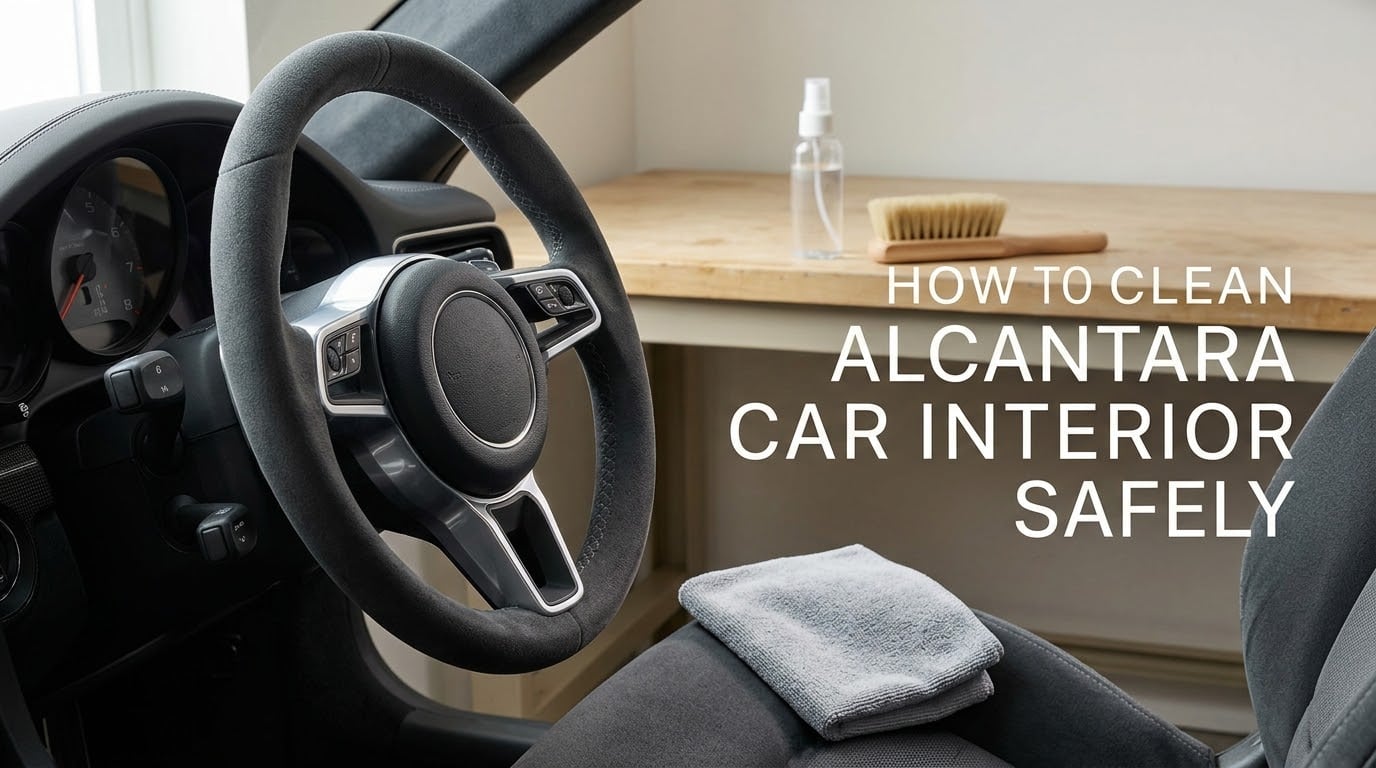
Alcantara is everywhere in modern luxury cars. You see it on steering wheels, seat inserts, door pulls, headliners, and dashboard trim on everything from a base-trim sports coupe to a six-figure performance sedan. Yet most owners treat it like leather, and that single mistake is what ruins the material within a year.
If you want to know how to clean alcantara car interior safely without turning your steering wheel into a shiny, slick mess, this guide walks you through the exact routine our shop uses on customer cars every week. We cover the products, the tools, the step-by-step process, the stains that ruin Alcantara fastest, the mistakes that destroy it, and a maintenance schedule that keeps the matte factory finish for years.
Table of Contents
- What Makes Alcantara Different from Leather
- Essential Tools and Safe Cleaning Products
- Step-by-Step Maintenance Cleaning
- Deep Cleaning for Stubborn Stains and Grime
- What NOT to Do (Avoid These Common Mistakes)
- Environmental Care and Seasonal Maintenance
- Maintenance Schedule and Routine Tips
- When to Call a Professional Detailer
- Frequently Asked Questions
- Final Thoughts on Cleaning Alcantara Car Interior Safely
What Makes Alcantara Different from Leather
Alcantara is not leather and it is not traditional suede. It is a synthetic composite made from a blend of roughly 68% polyester and 32% polyurethane, manufactured in Italy by the same company that holds the trademarked name.
The material is built in layers: a foam substrate sits beneath a short pile of ultra-fine microfibers that are dyed and brushed to create the soft, suede-like surface you can recognize instantly. That brushed pile is called the nap, and it is what gives Alcantara its grippy, matte feel.
Here is why that matters for cleaning: leather has a sealed top coat that can handle oils, conditioners, and even mild soaps. Alcantara has an open, fibrous structure that absorbs liquids, traps body oils, and reacts badly to harsh chemicals. Treat it like leather and you will flatten the nap, seal the surface with silicone, and create the shiny patches that every Alcantara owner complains about.
The other key difference is heat sensitivity. Alcantara tolerates warm water, but hot water or steam can permanently distort the foam backing and lift dye from the fibers. That is why every safe cleaning method on this list stays below lukewarm temperatures.
Alcantara vs Leather at a Glance
| Property | Alcantara | Coated Leather |
|---|---|---|
| Material | Polyester and polyurethane blend | Animal hide with synthetic top coat |
| Surface | Open microfiber nap | Sealed, semi-porous |
| Best cleaner | pH-neutral textile or Alcantara cleaner | pH-balanced leather cleaner |
| Conditioner | None, conditioning flattens the nap | Water-based leather conditioner |
| Water tolerance | Low, soak-through damages foam | Moderate, sealed surface |
| Heat tolerance | Low, steam can warp foam | Moderate to high |
| Typical finish | Matte grip | Glossy or satin sheen |
Essential Tools and Safe Cleaning Products
Before you touch the steering wheel, gather the right tools. The wrong brush or the wrong towel is what causes most of the damage we see on customer cars that arrive at our shop.
What You Need
- pH-neutral textile or Alcantara cleaner: Sonax Alcantara Cleaner, ColourLock Alcantara Cleaner, or a dedicated interior microfiber cleaner. These are formulated for the material’s chemistry.
- Distilled water: Tap water leaves mineral deposits that show up as faint white rings on dark Alcantara. Distilled water is cheap insurance.
- Short-pile microfiber towels: Pick a tight weave, around 200 to 300 GSM. Long-pile towels snag on the nap.
- Soft-bristle brush: A dedicated upholstery brush or a clean, soft toothbrush. Avoid stiff nylon bristles because they scratch the fibers.
- Vacuum with brush attachment: A horsehair or soft fabric brush, never a plastic crevice tool pressed into the nap.
- Spray bottle: For diluting cleaner and misting distilled water onto towels (never directly onto Alcantara).
- Suede cleaning bar: A dry cleaning block from a shoe repair aisle lifts dried surface stains without adding moisture.
- Nitrile gloves: Body oils from your hands transfer straight onto the wheel. Gloves keep the finish matte longer.
Safe vs Harmful Products at a Glance
| Safe to Use | Avoid Completely |
|---|---|
| pH-neutral Alcantara cleaner | Leather conditioner or leather balm |
| Distilled water only | All-purpose household cleaners |
| Diluted mild soap (rare, emergency use) | Bleach, ammonia, or solvent-based cleaners |
| Dry suede cleaning bar | Silicone-based dashboard dressings |
| Microfiber-safe fabric freshener | Armor-All or any shiny protectant |
| Isopropyl alcohol (ink only, dabbed) | Magic Eraser on the wheel |
A common question we get from first-time owners is whether a suede shoe cleaner from a shoe store works. The answer is yes for most dry surface stains, and no for anything oily. Shoe suede cleaners often contain conditioning agents that flatten Alcantara’s nap and leave the surface slick. Test any new product on a hidden area first, like the underside of a seat or inside a door pocket, and wait 24 hours before judging the result.
Step-by-Step Maintenance Cleaning
This is the routine our shop runs on every car that comes in for an interior detail. It works for the steering wheel, seats, door panels, headliner, and dashboard trim, with small adjustments for each surface.
Step 1: Vacuum the Surface
Start with a clean, dry vacuum and the soft brush attachment. Work in straight lines following the nap direction. Do not press hard and do not use the crevice tool on Alcantara; the plastic edge will leave shiny tracks.
For the steering wheel, rotate the wheel lock-to-lock and vacuum the front, sides, and back. Pay extra attention to the 10 and 2 o’clock positions where hands rest.
Step 2: Mist the Towel, Not the Material
Spray your pH-neutral cleaner onto a clean microfiber towel until it is damp, not soaked. Spraying directly onto Alcantara forces moisture into the foam backing and creates dark spots that take days to dry out.
Step 3: Blot, Don’t Rub
Press the damp towel onto the surface and lift. Repeat on the same spot, repositioning to a clean section of towel each time. Rubbing flattens the nap and creates the shiny patches that every forum thread complains about.
Step 4: Agitate Gently With a Soft Brush
For ground-in dirt or body oils on the steering wheel, work a soft brush in one direction following the nap. Light pressure only. Two or three passes are usually enough. Stop as soon as the towel comes back clean.
Step 5: Wipe With a Dry Towel
Use a second dry microfiber to blot away any remaining moisture. The goal is a surface that feels barely damp and dries in under 15 minutes.
Step 6: Restore the Nap
Once fully dry, brush the surface one final time with a clean, dry soft brush. This lifts the fibers back into the original matte texture. Skip this step and the cleaned area will look slightly darker than the surrounding material.
Quick Surface Adjustments
- Steering wheel: Repeat the routine weekly if you drive daily. Hand oils break down the nap faster than any other contaminant.
- Seats: Vacuum first, then follow the same blot-and-brush method. Use the crevice tool on seat tracks only.
- Door panels and pulls: Wipe more frequently here because elbow contact leaves invisible body oil that attracts dust.
- Headliner: Dry brush only. Never apply liquid overhead; it drips onto electronics and stains faster than it cleans.
Deep Cleaning for Stubborn Stains and Grime
Weekly maintenance handles 90% of what lands on Alcantara. The other 10% is the stain that has set in overnight and now refuses to lift. This is where a stain-specific approach matters, because the wrong move spreads the stain or sets it permanently.
Hand Oils and Sunscreen (The Shiny Wheel Problem)
This is the most common complaint on BMW, Audi, Alfa Romeo, and Cadillac forums. The wheel goes shiny and slick within months of ownership because body oils and SPF residue bond to the microfibers.
Treatment: Mix a 1:4 dilution of pH-neutral Alcantara cleaner with distilled water. Apply to a microfiber towel, not the wheel. Blot the shiny areas, then agitate with a soft brush following the nap. Repeat twice if needed. Dry with a second towel. If shine remains, brush the dry surface firmly to restore the nap. Most wheels return to a uniform matte finish after two rounds.
Food and Coffee Spills
Blot immediately with a dry microfiber. Do not wipe, you will spread the stain into the foam layer.
Once the surface is dry to the touch, mist distilled water onto a clean towel and blot from the outside of the stain inward. Follow with a light pass of pH-neutral cleaner. Repeat until the towel comes back clean.
Ink and Dye Transfer (Jeans, Pens)
This is the hardest stain to remove without damaging Alcantara. Dab, never rub, with a cotton swab lightly moistened with isopropyl alcohol. Work from the outside in. Test on a hidden area first because alcohol can lift factory dye on darker Alcantara.
Stop as soon as the ink stops transferring to the swab. Overworking the spot lightens the dye underneath.
Salt and Winter Slush
Winter drivers report accelerated wear on steering wheels because salty gloves leave a steady residue. Vacuum first to remove grit. Mist distilled water on a towel and blot, then follow with the standard pH-neutral routine. Salt left in the nap will crystallize and cut the fibers over time.
Sweat and Gym Gear
Same approach as food spills: dry blot first, then distilled water, then cleaner. Workout clothes carry body oils and laundry detergent residue that both attract to Alcantara’s surface.
What NOT to Do (Avoid These Common Mistakes)
Half of the cars we see with permanent Alcantara damage got there because someone followed advice from a forum thread or used a product designed for leather. Here is the list of moves that ruin Alcantara fast.
Do Not Use Leather Conditioner
Leather conditioner is the single most damaging product you can apply to Alcantara. It coats the open fibers with oils and silicones that flatten the nap, attract dust, and create permanent dark patches. Experienced forum users are unanimous on this point: if a product is labeled “conditioner,” keep it away from any Alcantara surface in your car.
Do Not Use Armor-All or Silicone Dressings
These products are designed for vinyl and plastic. They leave a permanent shiny film on Alcantara that does not buff out.
Do Not Soak the Material
Alcantara tolerates damp towels and short contact with moisture. It does not tolerate soaking. Waterlogged Alcantara develops dark water stains, mildew in the foam backing, and lifting of the dye at the edges.
Do Not Steam Clean Without Testing
Steam is debated across detailing forums, and there is no expert consensus. The risk is real: hot steam can warp the foam backing, lift dye, and shrink the fibers. If you choose to steam, hold the nozzle at least 15 centimeters away, use the lowest setting, and work in short passes. Test on a hidden area first. For most owners, the blot-and-brush method gives safer, more consistent results.
Do Not Use Household Cleaners
All-purpose sprays, dish soap, window cleaner, and bleach all leave residues or strip dye. They might look like they clean well at first, then the discoloration shows up a week later.
Do Not Skip the Brush
Wiping alone flattens the nap. Skipping the brush leaves a surface that looks clean but feels smooth and shiny under direct light.
Do Not Use a Magic Eraser
Magic Erasers are micro-abrasive. They work on plastic and coated leather. On Alcantara they scrub the surface dye off and leave a permanent lighter patch.
Environmental Care and Seasonal Maintenance
Environmental factors are the hidden killer of Alcantara. Most articles ignore them, which is why we added this section.
UV Exposure and Heat
Direct sunlight fades Alcantara faster than almost any other interior material. The dye in the microfiber pile breaks down under UV, and the foam backing softens in cabin heat above 60 degrees Celsius. Park in shade when possible and use a windshield sun shade. For cars parked outside daily, a UV-protective interior detail spray applied to a towel (never directly to the material) adds a year or two of usable life.
Humidity
High humidity creates two problems: it keeps Alcantara damp after cleaning, which breeds mildew, and it slows the drying of any accidental spill. Run your air conditioning in defog mode for 10 minutes after cleaning to drop cabin humidity and speed drying.
Cold Weather
Below freezing, Alcantara stiffens slightly and the foam becomes more brittle. Avoid aggressive brushing on a cold wheel. Let the cabin warm up for 5 to 10 minutes before cleaning in winter.
Summer Sweat and Sunscreen Season
From May through September, expect to clean the wheel weekly. Sunscreen transfers from your hands to the wheel within seconds, and the oils bond to the nap faster in warm weather. A microfiber steering wheel cover is an option for drivers who refuse to give up their SPF 50.
Maintenance Schedule and Routine Tips
Consistency is what keeps Alcantara looking factory-fresh for 10 years instead of worn-out in 2. Here is the schedule our shop recommends.
Weekly
- Vacuum steering wheel, seats, and door panels
- Blot with a barely damp microfiber
- Brush the nap on the steering wheel
Monthly
- Full pH-neutral cleaner routine on all Alcantara surfaces
- Spot-treat any new stains before they set
- Inspect door pulls and seat bolsters for early shine
Quarterly
- Deep clean the steering wheel with the 1:4 cleaner dilution
- Brush the entire seat surface to lift compacted nap
- Check headliner for any discoloration
Annually
- Professional interior detail including Alcantara treatment
- Reassess cleaning products, retire anything that leaves residue
- Inspect for permanent stains that may need professional re-dyeing
Daily Habits That Help
- Wash hands before long drives if you have applied lotion or sunscreen
- Keep a microfiber in the door pocket for quick wipes
- Avoid eating over Alcantara surfaces
- Store gym gear and wet clothes in the trunk, not on the seats
When to Call a Professional Detailer
DIY cleaning handles almost every Alcantara problem, but there are cases where a shop is the right call.
Signs You Need a Professional
- Permanent shine across the entire wheel that does not respond to two deep cleans
- Dye transfer that has lightened the underlying color
- Visible mildew smell or dark spotting from a previous soak-through
- Matting or pilling that does not lift with a brush
A professional detailer with an Alcantara-specific product line (Sonax, ColourLock, Gyeon Alcantara, or Dr. Beasley’s) can re-dye, re-texture, or replace individual panels at a fraction of the cost of an OEM steering wheel swap. The cost varies by region, but professional Alcantara restoration typically runs well below the cost of a new wheel and airbag assembly, and our customers report restored wheels that look like new for years after.
If the damage is structural, foam degradation, separated seams, or torn fabric, the only fix is replacement. That is the one outcome our routine above is designed to prevent.
Frequently Asked Questions
What is the best cleaner for cleaning Alcantara?
A pH-neutral cleaner specifically designed for Alcantara or microfiber textiles is the safest choice. Dedicated products like Sonax Alcantara Cleaner and ColourLock Alcantara Cleaner are formulated for the material chemistry and will not flatten the nap or leave residue.
What to use to clean Alcantara car seats?
Use distilled water with a few drops of pH-neutral Alcantara cleaner applied to a short-pile microfiber towel. Blot, do not rub. Follow with a soft brush to restore the nap once the surface is dry.
Is it bad to get Alcantara wet?
Light dampness is fine and part of routine cleaning. Soaking is the problem. Excess water penetrates the foam backing, causes dark water stains, and can breed mildew. Always apply liquid to a towel, never directly to the material.
Can you bring Alcantara back to life?
Yes, in most cases. Deep cleaning with a 1:4 dilution of pH-neutral Alcantara cleaner and distilled water, followed by brushing the nap once dry, restores the matte finish on wheels and seats that have gone shiny from hand oils. Permanently flattened or pilled fibers need professional re-texturing.
How to clean Alcantara car interior?
Vacuum first with a soft brush attachment, then mist pH-neutral cleaner onto a microfiber towel, blot the surface, agitate gently with a soft brush, wipe dry with a second towel, and brush the nap once fully dry. Repeat weekly for steering wheels and monthly for seats and door panels.
How do I care for Alcantara in my car interior?
Clean weekly with a damp microfiber, deep clean monthly with a pH-neutral Alcantara cleaner, avoid leather conditioners and silicone dressings, park in shade to limit UV damage, and brush the nap regularly to maintain the matte factory finish.
Is it okay to steam clean Alcantara?
Steam cleaning is debated. The risk is real because hot steam can warp the foam backing and lift dye. If you steam, hold the nozzle at least 15 centimeters away on the lowest setting and test on a hidden area first. For most owners, the blot-and-brush method gives safer and more consistent results.
Final Thoughts on Cleaning Alcantara Car Interior Safely
Knowing how to clean alcantara car interior safely comes down to three habits: blot instead of rub, use pH-neutral products designed for the material, and brush the nap after every clean. Skip the leather conditioner, skip the silicone dressing, and skip the Magic Eraser, and your steering wheel will still look factory-fresh five years from now.
Start with the weekly vacuum-and-blot routine, deep clean once a month with a proper Alcantara cleaner, and call a professional detailer only when DIY cannot lift a permanent stain. That is the routine that keeps Alcantara looking and feeling the way the manufacturer intended.