
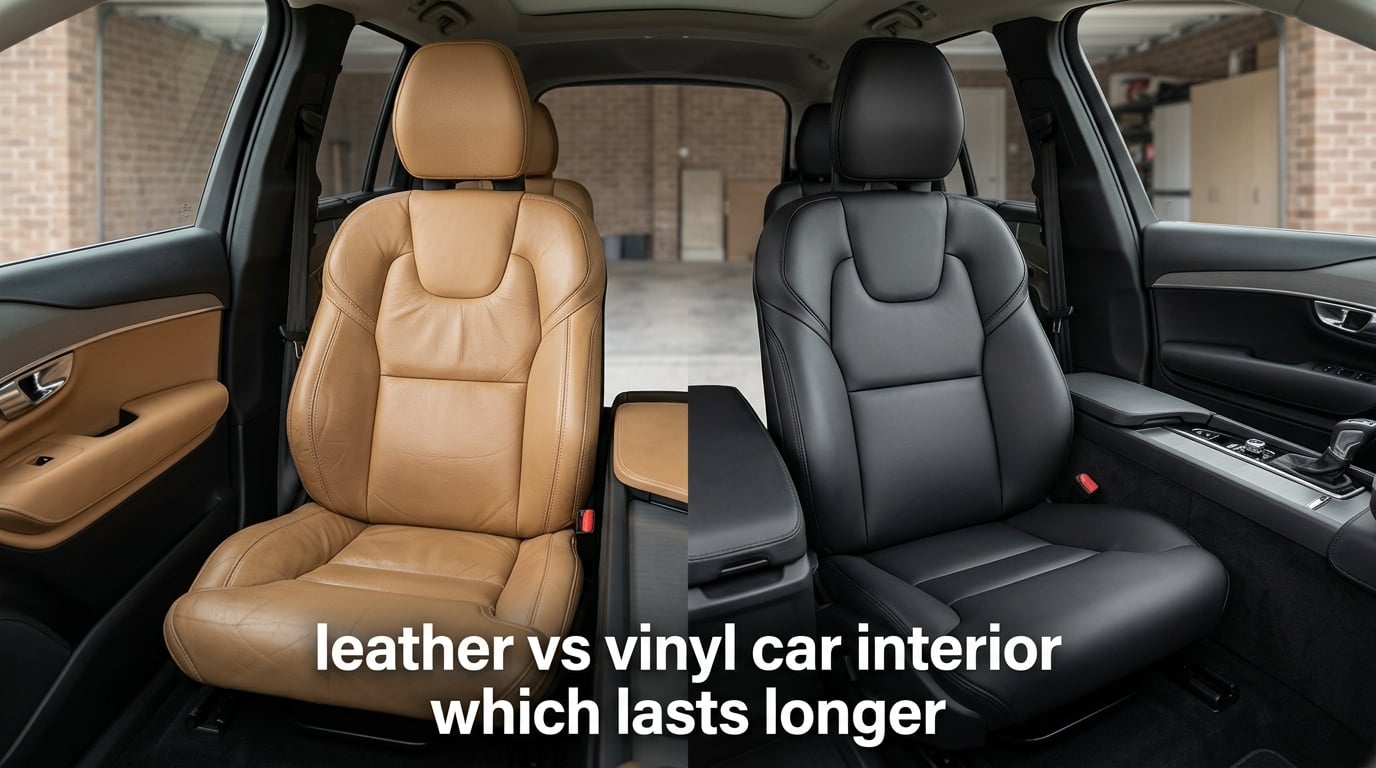
I get asked this question almost every week by friends buying new cars or restoring classics: does leather really last longer than vinyl in a car interior, or is that just showroom marketing? After spending years testing both materials across daily drivers, family SUVs, and a few vintage projects, I can tell you the honest answer is more interesting than a simple yes or no.
The short version: vinyl typically outlasts leather in pure wear tests, especially in harsh sun and heavy-use vehicles. Genuine leather can match or beat vinyl when it is conditioned consistently and kept out of direct UV damage. Coated automotive leather, which is what most modern cars actually have, falls somewhere in the middle and confuses the comparison entirely.
This guide breaks down exactly what you are sitting on, how long each material really lasts, and how to choose between them based on how you actually drive.
Table of Contents
- What Leather and Vinyl Car Interiors Are Actually Made Of
- Which Lasts Longer: Leather vs Vinyl Durability Compared
- How Maintenance Affects Longevity on Both Materials
- How to Tell if Your Car Interior Is Leather or Vinyl
- Pros and Cons of Leather vs Vinyl Car Seats
- Which Material Is Better for Families, Pets, and Hot Climates
- Cleaning and Conditioning Products That Actually Work
- Resale Value and Long-Term Cost Comparison
- Environmental Impact of Leather vs Vinyl
- Frequently Asked Questions
- Final Verdict: Which Lasts Longer and Why
What Leather and Vinyl Car Interiors Are Actually Made Of
Before we can compare how long each one lasts, we have to clear up a common misunderstanding. When buyers say leather, they usually mean one of three very different materials, and that distinction changes the durability answer completely.
Full-Grain and Top-Grain Leather
Genuine automotive leather starts as a hide, usually cow, that gets split into layers. Full-grain leather keeps the entire outer surface with all its natural grain, which is the toughest and most breathable option. Top-grain leather has the outermost layer sanded off and a uniform finish applied. Most premium cars use top-grain because it looks more consistent across seats and panels.
Below those two sits split-grain leather, made from the lower fibrous layers and usually finished to look like top-grain. It costs less and wears out faster. If you are shopping used and the seats feel plasticky, you are probably touching split-grain with a heavy coating.
Coated vs Uncoated Leather
Here is the part that catches most owners off guard. Almost every modern car leather seat is coated with a thin polyurethane or urethane layer. That finish protects against stains and UV but also seals the hide so it cannot breathe the way jacket leather does.
Forum detailers regularly debate whether coated leather even benefits from traditional conditioning. I have seen coated bolsters crack on 6-year-old cars that were never conditioned and on identical cars that were conditioned monthly. The urethane topcoat tends to fail on its own timeline regardless of what is underneath.
Vinyl and Modern Synthetic Leathers
Automotive vinyl is polyvinyl chloride (PVC) or polyurethane (PU) laid over a polyester or foam backing. Marine-grade vinyl adds UV stabilizers and antimicrobial compounds that automotive vinyl often skips to keep costs down.
Premium synthetic leathers like BMW Sensatec, Mercedes MB-Tex, and many modern vegan interiors are polyurethane-based and behave like coated leather but without any actual hide underneath. They scratch less than top-grain leather and tolerate cleaners that would damage uncoated hide.
Which Lasts Longer: Leather vs Vinyl Durability Compared
When people ask which lasts longer between leather and vinyl car interior, they usually want a number. The honest answer depends on climate, maintenance, and which type of leather we are talking about, but here are realistic ranges I have seen across multiple vehicles and forum reports.
Realistic Lifespan Numbers
Standard automotive vinyl seats typically last 8 to 12 years before they show cracking or peeling along stress points. Marine-grade vinyl, when it ends up in a car, can stretch that to 15 years or more. Genuine uncoated top-grain leather averages 7 to 10 years in daily drivers and can reach 15 to 20 years in garage-kept classics with regular conditioning.
Coated automotive leather is the wild card. I have personally seen coated leather seats in 5-year-old cars with deep bolster cracks and identical interiors at 12 years that still look new. The urethane topcoat decides the timeline, not the hide beneath.
How Each Material Fails
Leather tends to fail by drying out and cracking along the bolsters and stitching lines. Once a crack starts, it spreads because the fibers underneath have lost their oils. Vinyl fails by peeling and flaking, usually after the plasticizers migrate out of the material in heat cycles. You will often see vinyl seats in Arizona with the surface coming off in sheets after a decade.
Forum members on Jaguar and Corvette boards have shared photos of original Ambla vinyl in 40-year-old cars that still looks presentable, alongside leather in the same age range that looks far worse. Vinyl often wins the long-term museum test.
UV and Heat Resistance
This is where the gap widens. Vinyl is highly resistant to UV when formulated with stabilizers, but the cheap stuff used in many economy cars fades fast. Quality automotive vinyl is rated for 1,000+ hours of ASTM G154 or AATCC 16E UV exposure before noticeable fade.
Leather absorbs UV and oxidizes, which is why it turns from tan to dark brown over the years. Conditioners with UV blockers slow this but cannot stop it. If your car lives outdoors in Texas, Florida, or Arizona, vinyl generally ages more gracefully.
How Maintenance Affects Longevity on Both Materials
Maintenance is where most of the lifespan difference comes from. Two identical cars with the same seats can end up with wildly different interiors after 10 years based purely on what the owner did or did not do.
Leather Care Routine That Works
I clean leather seats every 4 to 6 weeks with a pH-balanced leather cleaner and follow with a conditioner that contains UV inhibitors. For uncoated leather, this actually penetrates and restores oils. For coated leather, it mostly sits on top and protects the urethane layer from drying out.
Meguiar’s Gold Class Leather Cleaner and Leather Master are popular with professional detailers on Autopia forums. Avoid anything with silicone or petroleum distillates, because those can break down the urethane coating over time and leave a greasy film.
Vinyl Care Routine That Works
Vinyl is much easier. A mild all-purpose cleaner, a soft brush, and a microfiber towel is enough for most messes. Follow with a vinyl protectant containing UV blockers, and you are done. 303 Protectant is the go-to recommendation across the forums I follow, and Griot’s Vinyl Rubber Dressing is another solid option.
Do not use leather conditioner on vinyl. It does not absorb, leaves a slick surface, and can actually attract dust and cause the vinyl to get gummy over time.
Cost of Upkeep Over 10 Years
Leather costs more to maintain. Quality cleaners run higher per ounce, conditioners add to the bill, and any crack repair or recoloring service runs into the hundreds. Vinyl is a bottle of 303 and a pack of microfiber towels over the same decade. The initial savings on vinyl can grow into meaningful long-term savings for high-mileage drivers.
How to Tell if Your Car Interior Is Leather or Vinyl
With so many modern cars shipping coated leather and premium vinyl that both look like leather, identification is harder than it used to be. Here are the field tests I use and that detailers on the Autopia and Corvette forums recommend.
Visual Inspection
Look at the grain pattern closely. Real leather has random, irregular pores that vary in size and spacing. Vinyl has a uniform, repeating pattern stamped into the surface. Zoom in with your phone camera and the difference is usually obvious.
Check the stitching and edges. Real leather shows natural variations and the edges look fibrous. Vinyl edges look melted or perfectly smooth because the material is cut and heat-sealed.
Touch and Feel
Press your fingernail into the surface. Leather warms up quickly to body temperature and the material compresses with fine wrinkles around the pressure point. Vinyl stays cooler and feels plasticky, with much less give.
Smell test still works on older cars. Real leather has that distinctive hide scent that does not fade. Vinyl smells like, well, vinyl, especially on a hot day.
The Water Test
Place a tiny drop of water on an inconspicuous area. On uncoated leather, the water darkens the surface as it absorbs within seconds. On coated leather and vinyl, the drop sits on top and beads up. This test alone will not tell you coated leather from vinyl, but it confirms whether you have uncoated hide.
Pros and Cons of Leather vs Vinyl Car Seats
Both materials have clear strengths and clear drawbacks. Here is the honest list I share with anyone who asks.
Leather Advantages
Leather breathes, which means it does not get as sticky against bare skin in summer. It develops a patina that many enthusiasts love. It feels premium and tends to support higher resale values, especially on luxury and sport models. Properly maintained leather can outlast vinyl by years in garage-kept cars.
Leather Disadvantages
Leather is sensitive to UV, heat, and neglect. Without conditioning, it dries, cracks, and fades. Coated leather hides its failure until the urethane layer gives way all at once. Repairs are expensive and rarely invisible. It also stains easily from denim dye, food, and pet hair oils.
Vinyl Advantages
Vinyl is waterproof, stain-resistant, and easy to clean. It tolerates kids, dogs, and road-trip spills without complaint. Quality automotive vinyl holds up to UV far better than uncoated leather and rarely needs more than a wipe-down. Initial cost is lower on factory-installed vinyl.
Vinyl Disadvantages
Vinyl does not breathe, so it sticks to bare legs in summer and feels cold in winter. Cheap vinyl cracks and peels after 5 to 8 years. It does not develop patina, which means a 15-year-old vinyl seat still looks like a 15-year-old vinyl seat. Resale impact is neutral to slightly negative on luxury trims.
Which Material Is Better for Families, Pets, and Hot Climates
Choosing between leather vs vinyl car interior comes down to how you actually use the vehicle. Here is how I think through the decision for different lifestyles.
Family Vehicles and Daily Drivers
For family SUVs and minivans, vinyl usually wins. Juice spills, mud, and crayons wipe off vinyl in seconds. The same mess on leather can stain permanently if not caught in time. Forum owners with young kids consistently report preferring vinyl or coated leather they treat like vinyl.
Pet Owners
If you regularly transport dogs, vinyl is the practical choice. Claws that would puncture leather only scuff vinyl. Fur wipes off without conditioner. The biggest complaint from pet owners online is leather punctures from nails, which leather repair shops charge a small fortune to fix.
Hot Climates and Convertibles
In hot climates, vinyl reflects more heat than coated leather and cools faster once the car is moving. Uncoated leather can reach surface temperatures over 150 degrees in direct sun, which is uncomfortable and accelerates drying. Convertibles should always have UV-resistant vinyl or marine-grade materials.
Luxury and Classic Cars
For high-end and classic cars, full-grain leather is part of the experience. Patina is a feature, not a flaw. If the car is garage-kept and detailed regularly, leather is the right call. Vinyl in a Bentley would feel out of place, and the resale market agrees.
Cleaning and Conditioning Products That Actually Work
I have tried dozens of products over the years. Here is the short list that consistently performs based on my own testing and what professional detailers recommend on Autopia and Corvette Forum.
For Leather Seats
Meguiar’s Gold Class Leather Cleaner is gentle enough for coated leather and effective on uncoated. Follow with Leather Master Leather Protection Cream, which adds UV inhibitors without leaving a slick residue. Avoid Armor All type products on leather; they contain silicones that break down the finish.
For Vinyl Seats
303 Protectant is the gold standard for vinyl UV protection. It does not leave an oily finish and lasts weeks between applications. Griot’s Vinyl Rubber Dressing and Chemical Guys VRP are solid alternatives. For deep cleaning, Meguiar’s All Purpose Cleaner Plus works on both leather and vinyl.
What to Avoid on Coated Leather
Skip heavy conditioning products that promise to soak in. Coated leather cannot absorb them, and they sit on the surface attracting dust. Avoid degreasers and harsh detergents. If a product says for use on both leather and vinyl, it is usually safe for coated leather specifically because it does not rely on absorption.
Resale Value and Long-Term Cost Comparison
Leather typically adds to resale value on mid-range and luxury trims, while vinyl is usually neutral. On economy cars, leather is sometimes a trim-level upgrade that costs more than it returns at resale.
Over 10 years, total cost of ownership often favors vinyl because maintenance supplies and repair services are cheaper. Leather owners who skip maintenance end up with cracked seats that cost thousands to recover. Vinyl owners who skip maintenance end up with seats that still look acceptable for a few more years.
For fleet vehicles and ride-share drivers, vinyl is the economic choice. For owners who keep cars 5 to 7 years and trade them in, leather often pays back the original upgrade cost.
Environmental Impact of Leather vs Vinyl
Neither material is environmentally perfect. Leather is a byproduct of the meat industry and is biodegradable, but tanning uses heavy metals and produces significant wastewater. Modern automotive leather is usually chrome-tanned, which raises concerns about end-of-life disposal.
Vinyl is petroleum-based and not biodegradable, but it lasts longer, which reduces replacement frequency. PVC production and disposal release dioxins under certain conditions. Newer polyurethane-based synthetics are slightly better but still rely on fossil fuels.
If environmental impact is your top priority, look for leather certified by the Leather Working Group or new bio-based synthetics entering the market. The honest answer is that the greenest seat is the one already in your car.
Frequently Asked Questions
What’s more durable, vinyl or leather?
Quality automotive vinyl generally outlasts leather in wear tests, especially in hot climates and high-use vehicles. Vinyl typically reaches 8 to 12 years before cracking or peeling, while genuine top-grain leather averages 7 to 10 years but can exceed 15 with consistent conditioning and limited UV exposure.
Which is better for car seats, leather or vinyl?
Leather is better for garage-kept luxury vehicles, owners who want premium feel, and buyers who condition seats regularly. Vinyl is better for family vehicles, pet owners, hot climates, daily drivers, and anyone who wants easy cleaning with minimal upkeep.
What are the disadvantages of leather car seats?
Leather is sensitive to UV, heat, and neglect, leading to drying and cracking without regular conditioning. Coated leather hides failure until the urethane layer cracks all at once. Repairs are costly, denim dye and pet oils stain easily, and the upfront cost is higher than vinyl.
What are the cons of vinyl seats?
Vinyl does not breathe, so it sticks to skin in summer and feels cold in winter. Cheap vinyl cracks and peels after 5 to 8 years. It does not develop patina like leather, often looks dated quickly, and has neutral or slightly negative resale impact on luxury trims.
Final Verdict: Which Lasts Longer and Why
So, leather vs vinyl car interior which lasts longer? In raw durability, vinyl wins on average. It tolerates heat, UV, spills, and neglect better than any leather option, and quality automotive vinyl routinely reaches 10 years with nothing more than basic cleaning.
Leather wins when you measure premium feel, breathability, patina, and resale on the right cars. If you are willing to condition every 4 to 6 weeks and keep the car out of direct sun, full-grain leather can outlast vinyl and look better doing it.
For most daily drivers, especially families, pet owners, and sun-belt residents, vinyl or a modern synthetic leather is the practical long-term choice. For enthusiasts who garage their cars and treat maintenance as part of the hobby, real leather is still worth the effort. Choose based on how you actually use the car, not on what the showroom feels like for the first month.