
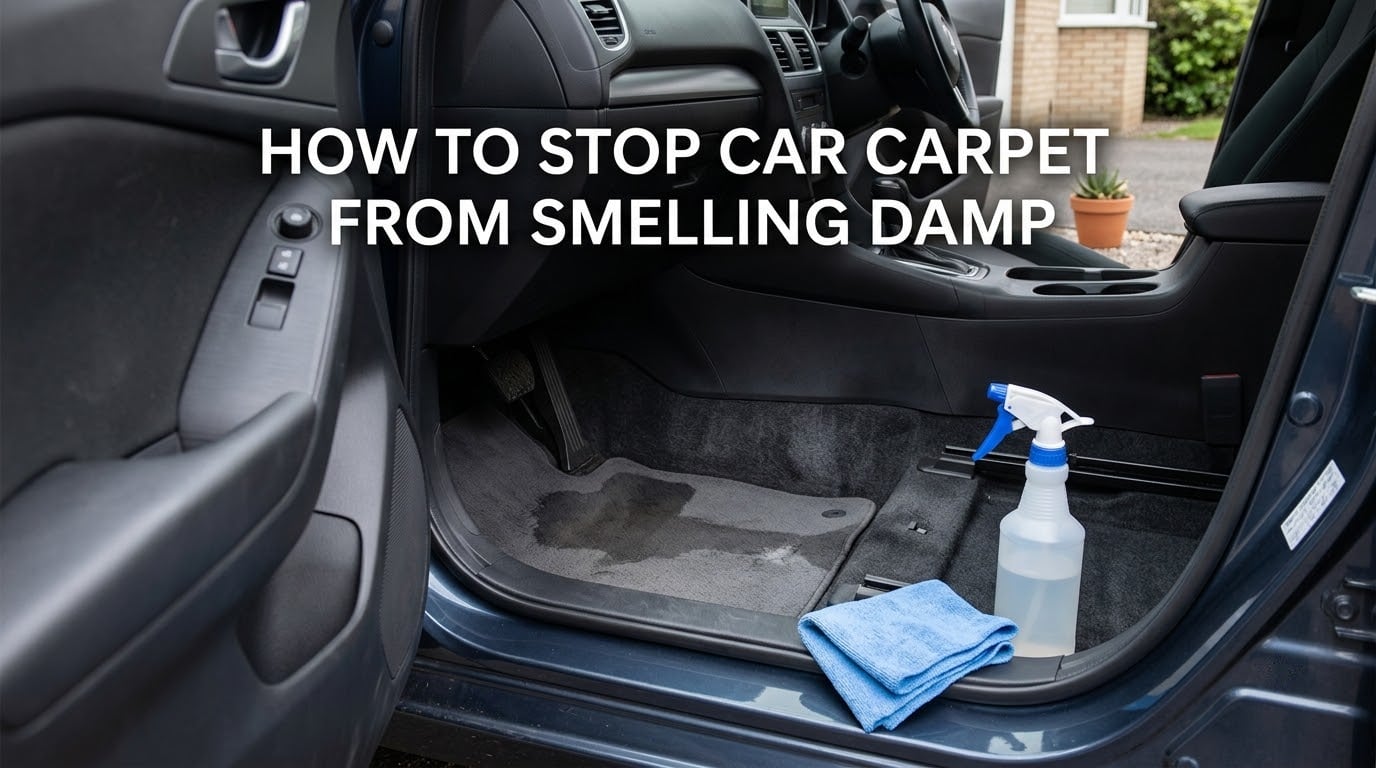
Learning how to stop car carpet from smelling damp starts with one truth: that earthy, musty odor almost always means moisture is hiding somewhere it should not be. Whether the trigger is a slow leak, AC condensation, a forgotten spill, or simply humid weather, the smell is a warning sign that mold or mildew has begun to grow in your carpet padding. We have put together this guide based on what our team has seen in countless customer vehicles, plus advice shared by detailers and DIY car owners online.
If the smell only shows up after rain or on damp mornings, you are not imagining things. Our team has found that moisture trapped under floor mats and inside carpet padding is the most common culprit. The good news is that with the right steps, you can clear the odor, fix the source, and prevent it from coming back.
Table of Contents
Quick Answer: How to Stop Car Carpet from Smelling Damp
If you need to act right now, here is the short version:
- Find and stop the moisture source (leak, spill, or AC drain).
- Pull up the mats, vacuum the carpet, and dry the padding completely.
- Use baking soda or white vinegar to neutralize odor, then replace the cabin air filter.
That trio handles the majority of mild cases. For deeper mold growth, you will need antimicrobial cleaners and longer drying time. We cover each step in detail below.
What Causes a Damp, Musty Smell in Car Carpet
Musty car odors do not appear on their own. They are the by-product of mold or mildew feeding on moisture and organic material like carpet fibers and padding. Here are the five causes our team sees most often.
Water Leaks and Intrusion
The number one source is water getting into the cabin where it should not be. Common leak points include door seals, sunroof drains, windshield weatherstripping, and clogged cowl drains. A single rainstorm is enough to soak the carpet and start mildew growth within 24 to 48 hours. Reviewers on r/askcarguys report cases where a sunroof left slightly open for an extended period led to standing water under the carpet and upholstery.
AC Condensation and Evaporator Issues
Your air conditioning system pulls humidity out of the air and drains the water through a small tube under the car. When that drain clogs, condensation backs up into the HVAC housing and soaks the carpet on the passenger side. The result is a classic musty smell that appears within a minute of turning on the AC.
Spills and Stains
Coffee, soda, milk, and pet accidents all leave organic matter inside the carpet. Even after the surface dries, the sugars and proteins feed mold colonies deep in the fibers. Reviewers note that spills wiped up quickly rarely cause lasting odor, but a spill that soaks into the padding almost always will.
High Humidity and Climate
If you live in a humid region, your car interior absorbs moisture every time the doors open. Closed-up vehicles in warm, wet climates are essentially incubators for mildew. Adding a wet umbrella, gym bag, or damp floor mat pushes the moisture level over the edge.
Trapped Moisture Under the Carpet
This is the hidden cause most drivers miss. Water can pool under the carpet padding for weeks without any visible wet spot on the surface. The padding acts like a sponge, holding moisture against the metal floor pan where rust and mold thrive. Forum users frequently report finding pre-mold and surface rust only after pulling up the carpet.
How to Remove the Damp Smell from Car Carpet
Once you understand the cause, the fix follows a clear sequence. Our team recommends working through these steps in order so you do not just mask the smell temporarily.
Step 1: Find and Fix the Moisture Source
Before you clean anything, locate where the water is coming from. Start the car, run the AC, and look for dripping water under the passenger side firewall. If you see none, your AC drain may be clogged and a shop can clear it in minutes. Inspect door seals for cracking, check the sunroof drains by pouring water into the sunroof channels, and look at the windshield cowl for leaves blocking the drain.
Step 2: Dry the Padding Thoroughly
This is the step most people skip, and it is the reason smells come back. Pull up the floor mats and, if possible, lift the carpet to expose the padding underneath. Aim box fans at the wet area and run them for at least 24 hours. A wet-dry shop vac pulled across the padding speeds things up considerably. If you have a dehumidifier, set it inside the car with the doors open for the first hour, then close them and let it run overnight.
Step 3: Deep Clean the Carpet
Vacuum the entire carpet thoroughly, then apply a carpet cleaner designed for automotive interiors. Work it in with a stiff brush, allow dwell time per the label, then extract with a wet-dry vac or carpet extractor. For mold spots, an antimicrobial cleaner is essential. Reviewers on r/AutoDetailing recommend enzyme-based cleaners because they break down the organic matter mold feeds on.
Step 4: Use Natural Odor Neutralizers
Baking soda is the simplest deodorizer available. Sprinkle a generous layer over the dry carpet, let it sit for 8 hours or overnight, then vacuum it up. For stronger odors, white vinegar in a spray bottle (one part vinegar to two parts water) lightly misted on the carpet and allowed to air dry works well. Do not over-saturate, since you are trying to remove moisture, not add more.
Step 5: Replace the Cabin Air Filter
The cabin air filter sits behind the glove box and traps particles before they enter the HVAC system. A filter saturated with mildew spores will keep re-infecting the cabin every time you run the fan. Most filters cost little and take 10 minutes to swap. This single change often eliminates the musty smell that lingers after cleaning.
Health and Safety Considerations
Mold spores can trigger allergy and asthma symptoms, especially in sensitive individuals. If anyone in your household has respiratory issues, address the smell quickly and consider wearing an N95 mask during cleaning. Persistent mold growth under padding can affect indoor air quality for years. Reviewers on r/CleaningTips warn that visible mold on the carpet surface usually means much more is growing underneath. In severe cases, professional interior extraction is the safer choice.
Prevention Checklist: Keep the Smell from Coming Back
Prevention is cheaper than remediation. Our team uses this seasonal checklist on every customer vehicle that comes back with a moisture complaint.
- Weekly: Shake out floor mats and let them dry in the sun.
- Monthly: Vacuum the carpet thoroughly, including under the mats.
- Quarterly: Run the AC on max heat for 5 minutes to dry the evaporator.
- After rain: Check for wet spots and dry the carpet the same day.
- Twice a year: Replace the cabin air filter and clear the AC drain.
- Seasonal: Crack a window in dry weather to vent humidity.
When to Call a Professional
DIY cleaning handles most mild cases, but some situations call for a detailer. If the smell returns within a week of cleaning, the padding is likely holding water. If you see visible mold growth larger than a dinner plate, or if anyone is having allergy symptoms while driving, professional extraction and antimicrobial treatment are worth it. A mobile detailer with a carpet extractor and ozone machine can usually resolve persistent cases in a single visit.
Frequently Asked Questions
How to get rid of musty smell in vehicle carpet?
Start by finding the moisture source, then dry the carpet and padding with fans for at least 24 hours. Vacuum thoroughly, apply baking soda overnight, and replace the cabin air filter to stop the odor from returning.
What kills mold in a car carpet?
Antimicrobial and enzyme-based cleaners are most effective at killing mold in car carpet. White vinegar can also kill surface mold, but persistent growth under the padding usually requires a professional extractor and antimicrobial treatment.
How long does it take for a wet car carpet to dry?
A wet car carpet typically takes 24 to 48 hours to dry with box fans and ventilation. Padding underneath can hold moisture much longer, so aim fans directly at lifted carpet sections for at least a full day before closing everything up.
Is it safe to drive a car that smells like mold?
Yes, but it is not ideal for your health. Mold spores can trigger allergy and asthma symptoms, especially during long drives with the windows closed. Address the smell quickly to protect indoor air quality.
Conclusion
Learning how to stop car carpet from smelling damp comes down to one principle: control the moisture. Find the source, dry the padding completely, deep clean the carpet, and replace the cabin air filter. With the seasonal prevention checklist in place, you will not have to deal with the smell returning next time the weather turns wet.
If your vehicle has stubborn moisture problems or worn interior trim, our team at Segal Motor Trimmings can help. We work on carpet replacement, headliners, and interior restoration for customers who want the smell gone for good.