
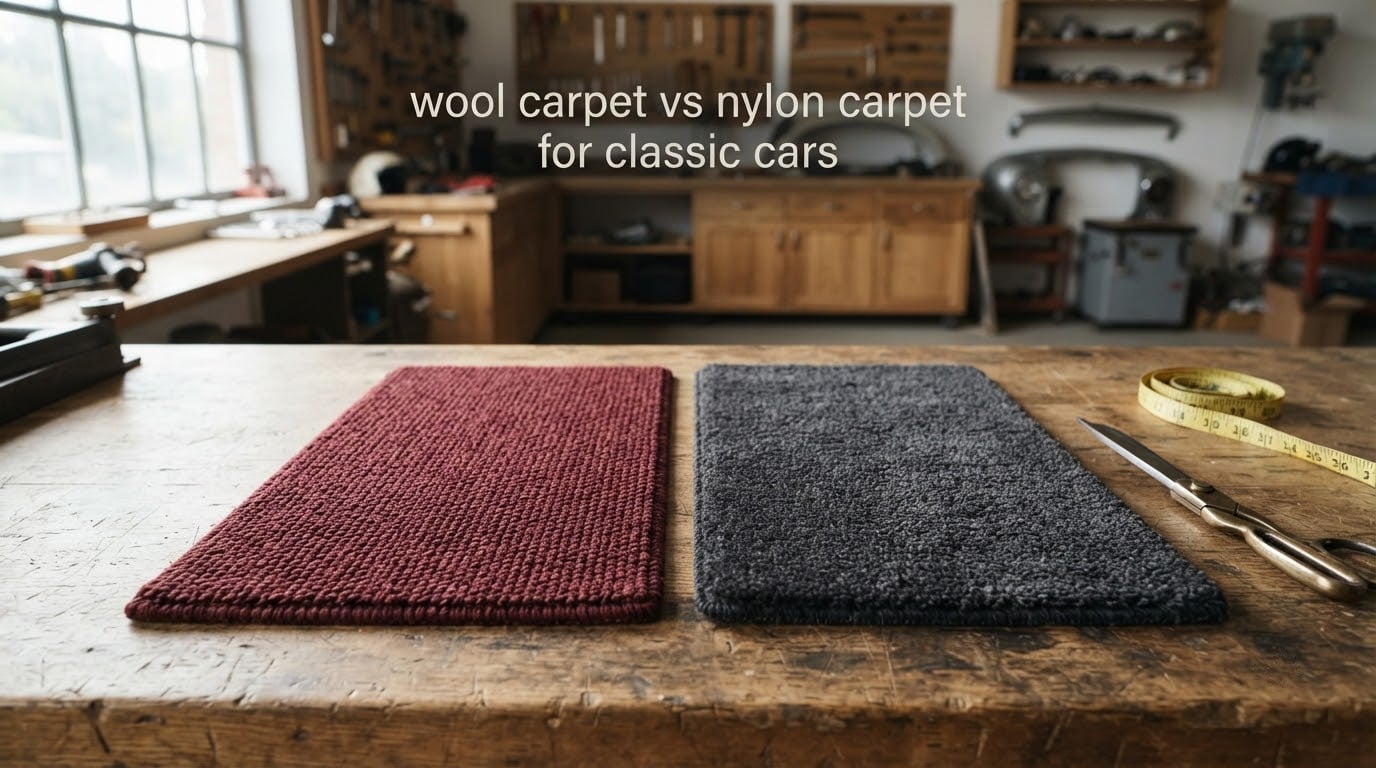
Choosing between wool carpet and nylon carpet for a classic car is one of those decisions that looks small on paper but shapes how the cabin feels for the next two decades. Our team at Segal Motor Trimmings has supplied floor carpet to thousands of British, European, and American classic restorations, and the same question comes up almost every week: should I stay with the original-style wool, or move to a modern nylon kit?
The honest answer is that neither material is “best” in every situation. Wool delivers the look, feel, and aroma most concours judges and traditionalists want, but it asks for careful cleaning and controlled moisture. Nylon gives you stain resistance, fade resistance, and forgiving day-to-day use, but it never quite matches the depth of a proper Wilton weave. This wool carpet vs nylon carpet for classic cars guide walks through both materials so you can match the carpet to how the car will actually live.
Table of Contents
- Wool Carpet vs Nylon Carpet: The Quick Comparison
- What Wool Carpet Offers Classic Cars
- What Nylon Carpet Offers Classic Cars
- Durability and Longevity: Wool vs Nylon Over Time
- Cleaning and Maintenance Differences
- Authenticity vs Modern Practicality
- Climate-Specific Recommendations
- How to Install Classic Car Carpet (Wool or Nylon)
- Frequently Asked Questions
- Final Verdict: Which Classic Car Carpet Should You Choose?
Wool Carpet vs Nylon Carpet: The Quick Comparison
Wool carpet is a natural fiber, traditionally woven in a Wilton weave with cut pile, prized in classic British marques like Triumph, MG, Jaguar, and the early Range Rover. Nylon carpet is a synthetic option, most commonly tufted in a cut pile at a 1/10 gauge, used in later production runs and in modern reproduction kits for daily drivers and restomods.
For a fast side-by-side, here is how the two stack up against the criteria classic car owners ask us about most often:
- Authenticity: Wool wins. It is the original factory material on most pre-1990 European classics.
- Stain resistance: Nylon wins. Synthetic fibers repel moisture and shrug off spills.
- Feel underfoot: Wool wins. Plusher, denser, and quieter.
- Fade resistance: Nylon wins. Holds dye under direct UV better than untreated wool.
- Maintenance effort: Nylon wins. Tolerates normal vacuuming and spot cleaning.
- Long-term value to a concours restoration: Wool wins. Judges can spot the difference.
Use this section as the foundation for the deeper material breakdown that follows. Where we differ from common advice is in how strongly the answer depends on your climate, your driving habits, and how long you plan to own the car. We will come back to those factors in our climate-specific recommendations later in the guide.
What Wool Carpet Offers Classic Cars
Wool carpet for classic cars is most often a Wilton-woven construction, sometimes a heavyweight loop pile, with a dense weight measured in ounces per square yard. It is the traditional factory material on marques like Jaguar, Triumph, Morgan, Rover, and most pre-1990 British saloons and roadsters. When you open the door of a properly restored classic and catch that warm wool aroma, you are experiencing the material that came out of the factory.
The Strengths of Wool in a Classic Car
Wool is a natural fiber with a luxury feel that synthetics still cannot fully replicate. It takes dye deeply, which is why old wool carpets often have a richer, more saturated color than modern replacements. Wool also has a natural crimp that helps it bounce back from foot pressure, so heavy footwells and transmission tunnels do not mat down as quickly. As a sound deadener, wool is denser than nylon carpet of equivalent pile weight, and that density translates into a quieter cabin on long drives.
Owners of concours-level cars often choose wool for one practical reason: judges know the difference. A correct Wilton weave in the right color, binding, and pile weight can add tangible points at judging. Forum members on British Car Forum threads consistently note that buyers restoring a Triumph TR3 or TR6 for show purposes will source wool first and only consider nylon as a fallback.
The Weaknesses of Wool You Should Know
Wool is not as forgiving as nylon when it comes to moisture, mildew, and staining. Wool absorbs water readily, and standing water can cause shrinkage and binding failure at the edges. On forum threads about older Range Rovers, owners repeatedly cite shrinking and binding coming undone as the failure mode that finally forces a carpet replacement.
Wool also takes more careful chemistry to clean. Hot water and harsh detergents can damage the fiber, and standard wool soap with cool water is the safer routine. The Quora community agrees that wool lasts “for ages” when maintained properly, but it is unforgiving of shortcuts.
Typical Cost and Sourcing of Wool Carpet
Wool carpet kits are generally the premium tier of reproduction carpet because the Wilton weaving process is slower and the raw fiber costs more. Wool is also less commonly stocked in the universal carpet aisle — many vendors keep only nylon or polypropylene on the shelf and order wool kits on a per-model basis. That can mean longer lead times and a tighter color match discussion if you are restoring a less common car.
What Nylon Carpet Offers Classic Cars
Nylon carpet for classic cars is overwhelmingly the Essex-style tufted construction: 100% nylon yarn, cut pile, tufted to a 1/10 gauge, around 22.5 ounces of yarn per square yard. Newark Auto Products and similar aftermarket makers have built decades of product around this format, and it is what most people picture when they say “modern reproduction carpet.”
There are also nylon-loop kits, polypropylene kits (sometimes called olefin), and rayon-loop kits available. Loop pile gives a different texture and slightly different cleaning profile. Polypropylene sits between nylon and wool in feel and is the cheapest option, while rayon loop is a vintage-style synthetic that some British car owners choose for early TR and MGA restorations.
The Strengths of Nylon in a Classic Car
Nylon is rot proof, water resistant, and far more forgiving of the realities of daily driving. Muddy boots, coffee spills, dog hair, and accidental leaks are all easier to handle on nylon than on wool. Nylon also holds dye under UV exposure better than untreated wool, which matters for cars parked outside or driven in strong sun.
Forum members on classic Triumph and British car threads consistently describe nylon kits from established vendors as fitting well, looking presentable, and lasting through years of weekend shows and weather. For daily drivers and drivers who actually use their classic cars, that practical reliability tends to outweigh the small loss of authenticity.
The Weaknesses of Nylon You Should Know
Nylon carpet, even a high-quality Essex-weight kit, does not have the same depth, density, or texture as Wilton wool. A trained eye at a concours, or simply someone who has sat in many well-restored classics, will often notice. Nylon can also mat down in high-traffic areas over years, and cheaper polypropylene kits can crush visibly within a season or two.
A few forum owners have also reported that aftermarket nylon kits do not always fit as precisely as the original wool, with bunching at the transmission tunnel or gaps near the seat rails. Choosing a vendor who patterns their kits from original floor pans rather than reverse-engineering from a competitor’s product is how you avoid that complaint.
Typical Cost and Sourcing of Nylon Carpet
Nylon kits are usually less expensive than wool kits and are more commonly available off the shelf. Polypropylene kits sit at the cheapest end, and you may find universal-fit bulk carpet sold by the yard that some owners use for trunks and less visible floors. Custom die-cut kits patterned for your exact model are a noticeable step up in fit and finish, and Segal Motor Trimmings builds both custom nylon and wool kits to original specifications.
Durability and Longevity: Wool vs Nylon Over Time
Durability in a classic car carpet is about three things: how the fiber holds up under foot traffic, how the dye holds up under UV, and how the edges, binding, and padding hold up over decades.
Wool, when properly maintained, can last 25+ years in a classic car, as any concours survivor will attest. Original wool from a 1970s Triumph or Jaguar often looks presentable even when the binding has surrendered. The natural crimp of the fiber is what helps wool recover from compression and resist matting for so long.
Nylon of equivalent weight also lasts a long time, with modern solution-dyed nylon showing very good fade resistance. A well-installed Essex-style carpet from a respected vendor routinely lasts 15 to 20 years in regular use. The shorter lifespan tends to come from cheaper polypropylene kits or from poor installation that causes wear at high-friction points.
How Each Material Handles Sun and Fade
Sun is the silent killer of any carpet. In Arizona, southern California, and similar high-UV environments, untreated wool will fade faster than modern solution-dyed nylon. Window tint, car covers, and shaded storage all help. If you regularly park outdoors and skip those steps, nylon is the more forgiving choice.
Where Each Material Usually Fails First
Wool’s typical failure modes are binding coming undone at the edges, shrinking near the transmission tunnel after a leak, and mildew in damp climates. Nylon’s typical failure modes are matting in high-traffic spots, seam separation at poorly bonded joins, and fade from UV if unprotected.
Cleaning and Maintenance Differences
If you do not enjoy cleaning cars, nylon is the material for you. Routine vacuuming, occasional spot cleaning with a mild all-purpose cleaner, and the occasional shampoo will keep nylon looking sharp for years. Wool, by contrast, wants a more deliberate routine that mirrors how you would care for a fine wool sweater.
How to Clean Wilton Wool Carpet in a Classic Car
The most recommended approach from the Range Rover forum and similar communities is to take the carpet out of the car and hand wash it in tepid soapy water, then hang it to dry flat. Use a proper wool soap, not a general household detergent, and avoid hot water, which can shock the fibers and cause shrinking or felting.
For small stains, blot — never rub — with a damp cloth and wool-safe cleaner. Apply a fabric protector made for wool once the carpet is fully dry, and the surface will resist future stains much better.
How to Clean Nylon Carpet in a Classic Car
Nylon responds well to a regular upright vacuum with a beater bar, a spray-on carpet cleaner, and an occasional extraction cleaning. You can use a wider range of cleaning products without the fiber-damage worries that wool raises. Avoid bleach-based products, which can strip dye and weaken fibers over time, even on nylon.
Padding and Underlay Care
Both wool and nylon carpet benefit from a quality padding underlay that absorbs foot impact and adds sound deadening. The padding itself is usually jute, felt, or modern foam, and it has its own lifespan. When you replace your carpet, always inspect the padding; a saturated or compressed pad will telegraph through to the new carpet and shorten its life.
Authenticity vs Modern Practicality
This is the heart of the decision for many owners, and it is one of the most debated topics on every classic car forum. The right answer depends on what you want the car to do for you.
If your classic is a show car entered in concours judging, the answer is almost always wool. Concours judges deduct points for incorrect materials, and the difference between a Wilton weave and a tufted nylon cut pile is visible up close. The investment in wool usually pays back in judging scores and in the kind of build quality that holds resale value decades later.
If your classic is a daily driver you actually use, nylon is often the smarter choice. The stain resistance, fade resistance, and forgiving maintenance mean you enjoy the car instead of babying the cabin. One Range Rover forum owner captured the practical side of this decision well: they replaced the original wool in the cargo area with nylon because “no one will know the difference,” and that pragmatic call is common among owners of cars that earn their keep on the road.
If your classic is somewhere in the middle — a weekend toy you drive to cars and coffee, occasional tours, sometimes shown — the decision becomes a judgment call. Many owners in this category choose wool for the visible floors and nylon for the trunk and seat kick panels, blending authenticity where it shows and practicality where it absorbs the most abuse.
Climate-Specific Recommendations
Climate is one of the most underrated factors in carpet choice, and it is the single biggest content gap we see in competing guides. The same material that performs beautifully in the English countryside can be a poor choice in Houston or Miami.
Hot and dry regions (Arizona, Nevada, inland California): UV is the primary threat. Choose nylon, ideally solution-dyed for fade resistance. Use window tint and a car cover whenever practical. If you want wool for authenticity, be prepared to apply UV-protective treatments and store the car out of direct sun.
Hot and humid regions (Gulf Coast, Southeast US, parts of Australia): Moisture is the primary threat. Nylon or polypropylene wins. Wool is risky unless you are committed to keeping the cabin dry and running a dehumidifier in storage. Mildew on wool is one of those problems that can become irreversible quickly.
Cold and snowy regions (Upper Midwest, Canada, Northern Europe): Snow, road salt, and moisture on boots are the primary threats. Nylon wins again because salt stains clean off it. Wool can handle winter use with careful cleaning but is far less forgiving of road salt residue.
Temperate and mild regions (Pacific Northwest, UK, much of Europe): Wool performs very well in these climates because humidity is moderate and UV is gentler. If you are restoring a British or European classic in these conditions, wool is often the right call and the climate will reward you for it.
How to Install Classic Car Carpet (Wool or Nylon)
Installation is identical regardless of which material you choose. The carpet is fitted over a layer of padding, glued or snapped to the floor pan, and finished around the edges with original-style binding. Follow these steps and you will get a fit that looks factory.
Step 1: Remove the Old Carpet and Inspect the Floor Pan
Pull out the seats and any trim that covers the carpet edges. Remove the old carpet and padding, then vacuum and inspect the floor pan for rust, holes, or moisture damage. Repair any rust before you install the new carpet, because a damp or rusty floor will destroy even the best carpet within a season.
Step 2: Test-Fit the New Carpet and Padding Dry
Lay the padding in place first, then lay the carpet over it without adhesive. Check the alignment around the seat rails, transmission tunnel, and door sills. Trim any excess, and mark where the carpet needs to be notched for seat brackets or shift levers.
Step 3: Apply Adhesive to the Floor Pan
Use a spray-on contact adhesive designed for automotive interiors. Apply a thin, even coat to both the floor pan and the back of the carpet, then let both surfaces flash off for the time recommended on the can (usually a few minutes, until the adhesive is tacky but not wet).
Step 4: Lay the Carpet and Bond It
Once the adhesive is tacky, lay the carpet into place starting from the center and working outward. Press firmly to ensure full contact. For walls and vertical surfaces, use a stronger contact adhesive or the original-style snap fasteners if your car used them. Avoid stretching the carpet aggressively, which can cause wrinkles and binding failure later.
Step 5: Reinstall Trim and Allow Adhesive to Cure
Reinstall the seats and trim, leave the doors open for ventilation, and let the adhesive cure for the full time listed on the product. Avoid driving the car for 24 hours if possible. This curing window matters more than most owners realize, especially in cool or humid weather.
If you would rather not do this yourself, Segal Motor Trimmings offers installation services for customers in the Boston area and ships cut-to-fit kits nationwide for owner installations.
Frequently Asked Questions
What is the best material for car floor carpets?
The best material depends on how you use the car. Wool is the traditional choice for concours restorations and feels closest to the original factory specification. Nylon is the practical choice for daily drivers because it resists stains, fading, and moisture far better than wool.
Is nylon or wool carpet better?
Neither is better in every case. Wool offers richer color, deeper pile, and an authentic feel that concours judges reward. Nylon offers easier cleaning, better fade resistance, and stronger performance in humid climates. Choose wool for a show car and nylon for a car you drive often.
What are the downsides of using wool carpets?
Wool absorbs moisture readily, can shrink or mildew in damp environments, and requires careful cleaning with wool-safe soap and tepid water. Wool also costs more and is less forgiving of spills than nylon.
Is 20 year old carpet unhealthy?
Not necessarily. A clean, dry wool or nylon carpet 20 years old is generally fine. The real risks are dust accumulation, mold growth in damp cars, and odors from old padding. Replacing both the carpet and the padding is the safest path if you are unsure about the history.
What type of carpet is used in cars?
Most classic cars from the UK and Europe used wool, typically a Wilton weave or heavyweight loop pile. Most American classics from the 1960s and later used nylon tufted cut pile, often called Essex material. Modern reproduction kits are available in both materials.
How do you properly glue automotive carpet to the car’s floor and walls?
Use a spray-on contact adhesive designed for automotive interiors. Apply a thin, even coat to both the floor pan and the back of the carpet, let both surfaces flash off until tacky, then lay the carpet starting from the center and press outward. For walls, use a heavier-duty contact adhesive or snap fasteners.
What is the carpet in cars made of?
Classic car carpet is made of either wool (natural fiber, Wilton woven) or nylon (synthetic, tufted cut pile). A small number of cars use polypropylene or rayon loop pile. The construction, weight, and pile style vary by marque and era.
Final Verdict: Which Classic Car Carpet Should You Choose?
The wool carpet vs nylon carpet for classic cars decision comes down to three honest questions: how do you use the car, what climate do you live in, and how long do you plan to own it. Wool rewards show-car owners, concours judges, and traditionalists who want the original factory feel and are willing to care for it carefully. Nylon rewards daily drivers, touring enthusiasts, and owners in humid, sunny, or snowy climates who want a carpet they can actually live with.
If you are not sure which side you fall on, our team at Segal Motor Trimmings is happy to talk through your specific car and use case. We supply both wool and nylon kits patterned from original floor pans, and we ship worldwide to owners restoring everything from a Triumph TR6 to an E-Type to a vintage Range Rover. Reach out with your model and a quick description of how you use the car, and we will help you choose the material and padding that will keep your classic comfortable, presentable, and authentic for 2026 and beyond.